19/10/2026 06:09
Booking a Telegram Channel Promotion: A Practical Workflow for Cambodian Stationery Shops
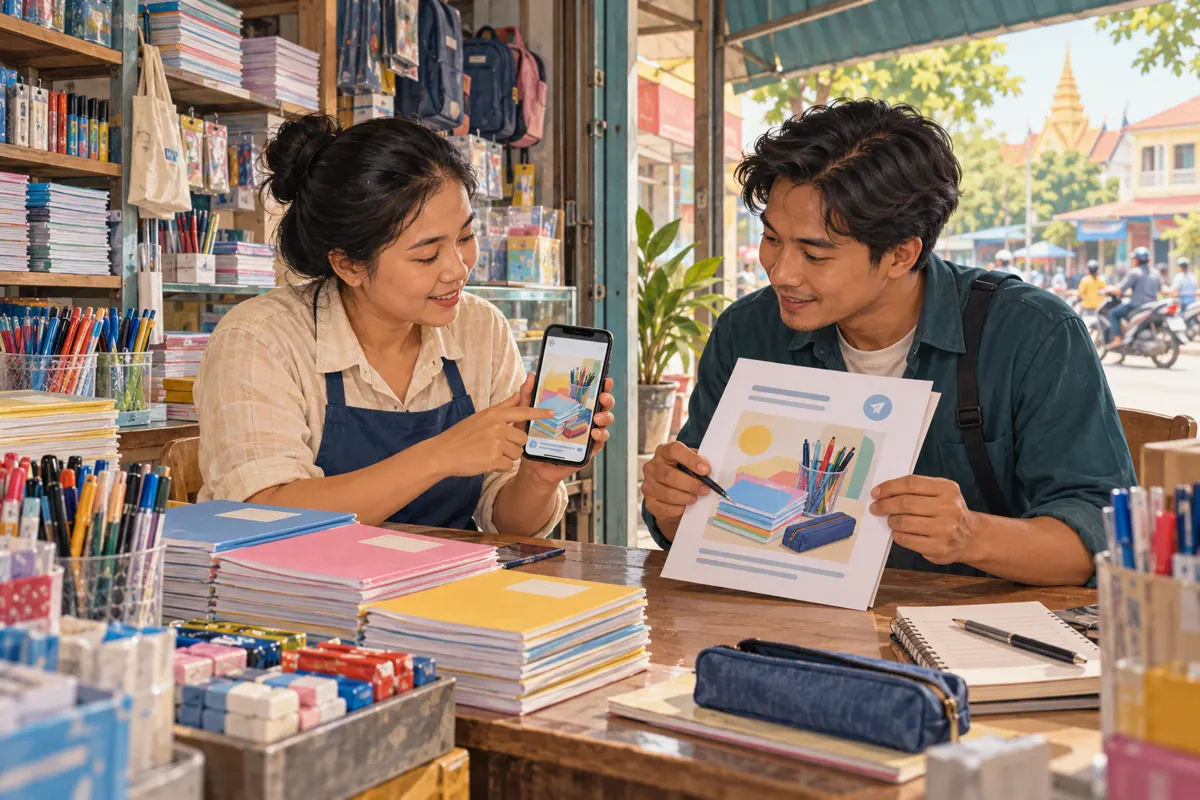
A Cambodian stationery shop preparing a school supply offer may consider paying a neighborhood Telegram channel to feature it. The useful question is whether the placement can explain the offer to people who could realistically buy it. A large view counter cannot answer that question alone. This guide follows a hypothetical Phnom Penh stationery shop from choosing a channel to reviewing inquiries after publication. It explains Telegram’s suggested-post workflow, the decisions that still require agreement between people, and where an SMM panel service belongs in the discussion. Every shop scenario below is illustrative, not a customer case study or a prediction of results.
1. Define the customer action before choosing a channel
Start with one action that staff can support. For the hypothetical shop, that action is asking whether a particular exercise-book bundle is available for collection. It is more useful than a broad objective such as becoming popular. The promotion should help a reader understand the bundle, decide whether the pickup location is convenient, and send a specific question. Write that action at the top of the campaign brief before looking at channel prices.
Prepare the operational answer behind it. Confirm the included items, available variations, stated currency, collection hours, and person responsible for replies. If delivery is available, describe its actual limits instead of implying nationwide coverage. Decide what happens when someone requests a different notebook format. Paying for attention while these details remain unresolved can create additional conversations without helping customers complete a purchase.
2. Evaluate the channel’s editorial fit
Read a sample of recent ordinary posts and paid placements. Look for a consistent subject, understandable language, useful local references, and a sensible relationship between advertisements and regular content. A neighborhood information channel might suit a nearby collection offer; an unrelated entertainment channel needs a stronger explanation of why its readers would care. Treat a channel’s name and description as claims to investigate, not proof of where its subscribers live.
Ask the operator what placement they are offering and why they think it fits. Request public examples of comparable formats rather than private subscriber lists. Check whether previous promotions clearly identify the seller and sponsorship. A channel willing to discuss content fit and practical limitations gives you more to assess than one selling only a large headline count. Decline if the proposed arrangement depends on disguising advertising as an independent recommendation.
3. Separate a channel placement from a panel view service
A channel partnership concerns an agreed piece of content appearing in someone else’s channel. The brief’s public service name Telegram Post Views identifies a different service type: post views. Its supplied description is empty. That provides no basis for claiming Cambodian viewers, genuine purchasing intent, a specific delivery method, or any relationship with Telegram. Do not treat buying that service as booking an editorial placement.
For this hypothetical shop, keep the initial partnership evaluation free of purchased views so the records are easier to interpret. If a panel purchase is considered separately, establish its current terms and platform compatibility before proceeding. Purchased engagement is not evidence of genuine interest, sales, ad delivery, or Cambodian users. Never use it to make a partner’s audience appear more valuable or to present a promotion as independently popular. A larger counter does not resolve uncertainty about channel fit.
4. Establish contact through the channel
Telegram’s official direct-messages announcement explains that enabled channels can receive private messages through the message bubble in the channel’s bottom bar. Channel owners can enable the feature in Channel Settings under Direct Messages, and may charge for messages. Check the interface before sending. The feature keeps channel conversations separate from the owner’s personal chats; it does not establish whether a particular commercial proposal is worthwhile.
Make the first inquiry concise: identify the shop, describe the product category, state the intended audience, and ask whether the channel accepts clearly disclosed promotions. For the hypothetical stationery offer, explain that collection is local and that the shop will answer product questions. Check the channel identity against its existing public presence. An unsolicited account claiming to represent the channel should not become your payment contact merely because it uses the same profile picture.

5. Write a placement agreement that matches the offer
Before submitting the creative, settle what the proposed purchase includes. Record the channel, content format, intended publication window, sponsorship wording, contact destination, and agreed duration. If pinning, a later reminder, or an additional post matters, negotiate it explicitly. None should be inferred from a general promise to promote the shop. Ask who handles corrections and what happens if stock changes before publication.
Use a small, bounded placement to answer a defined question, such as whether this channel produces relevant inquiries about the bundle. Set a spending ceiling based on what the shop can afford to learn, without assuming sales will repay it. Include creative preparation and staff time in that decision. If the operator cannot explain the deliverable or pressures you to accept unsupported performance promises, pause the arrangement rather than filling the gaps with optimistic assumptions.
6. Build a useful, visibly sponsored post
Show the actual stationery bundle clearly and describe its contents in the caption. State the price and currency if the offer has a confirmed price, then explain collection or delivery conditions. Use the language the intended readers understand; for a Khmer-speaking audience, have a competent Khmer reader check the final wording. Keep essential details in readable text rather than hiding them inside a busy product image.
Place an understandable sponsorship disclosure near the beginning. Identify the shop as the seller and avoid suggesting that the channel operator has used or endorsed the products unless that statement is true and authorized. A hypothetical English working draft might begin, “Paid promotion from a neighborhood stationery shop: ask about the pictured exercise-book bundle for local collection.” Replace general wording with verified shop details before use. Finish with one contact action and tell readers what information to include.
7. Review the suggested post before acceptance
Telegram’s suggested-post documentation says proposals are submitted through channel direct messages using the suggestion icon. A sender can propose a publication time or leave it open. The owner can propose changes to the content or price; after both sides approve, publication can be immediate or scheduled. Telegram supports offers using Stars or Toncoin. These are platform features, not a promise that a channel will accept your promotion.
Review the complete version after every substantive revision. In the hypothetical shop, an editor might shorten the caption and accidentally remove the collection restriction. Correct that before acceptance. Check the image, sponsorship disclosure, bundle contents, currency, location, contact route, and publication time together. Name one shop representative who can approve the final version. Do not allow approval of an earlier draft to be interpreted as approval of a later offer with different terms.

8. Understand the payment boundary and publication check
Telegram states that the channel owner receives the suggested-post reward after 24 hours and that earlier removal returns the offered amount. Its documentation also warns that third-party refunds for Stars purchases can affect an owner’s balance. Read the current confirmation screen and official terms before committing. This mechanism should not be interpreted as a sales guarantee or a general refund promise for arrangements negotiated elsewhere.
At publication, open the actual post and compare it with the approved version. Confirm the destination and whether the shop can receive messages. Record the post link and publication time, then flag any material error promptly through the agreed contact. If the shop needs the post to remain available beyond the platform’s initial payment window, rely on an explicit agreement about duration. Do not assume that payment timing defines the whole commercial arrangement.
9. Prepare staff for the questions the promotion creates
Give the responding staff member the approved offer and current stock information. Prepare short answers about notebook dimensions, page style, bundle substitutions, collection location, and delivery availability where relevant. These should help staff respond accurately rather than force every customer through a rigid script. If a customer asks something the post already explains, answer it helpfully and consider whether the original wording could be clearer.
In the hypothetical example, a parent asks whether the pictured books have ruled or squared pages. Staff should check the product, answer directly, and confirm the requested quantity before discussing collection. Record an inquiry separately from a confirmed order. If the requested variation is unavailable, say so instead of substituting silently. Avoid asking customers to publish phone numbers or children’s details in public discussions; move necessary order coordination to the shop’s chosen private contact route.
10. Decide whether to repeat the placement
Review the placement against the original question. Did inquiries concern the advertised bundle? Could the shop serve the locations people requested? Did customers understand the currency and collection terms? Record completed purchases only when the shop has corresponding order evidence. Asking customers how they found the offer can provide useful context, but their answers may be incomplete. Keep uncertain attribution visible rather than assigning every sale during the period to the channel.
Telegram’s Channels FAQ explains that view counts are approximate, include views of forwarded copies, and may count a returning viewer again after a period. They are not a count of distinct local buyers. Avoid the common mistake of dividing orders by that counter and presenting the result as a precise customer conversion rate. Repeat the placement only when the audience fit, operational workload, cost, and observed inquiries justify another test. Change a specific weakness, such as an unclear product variation, before increasing spending.
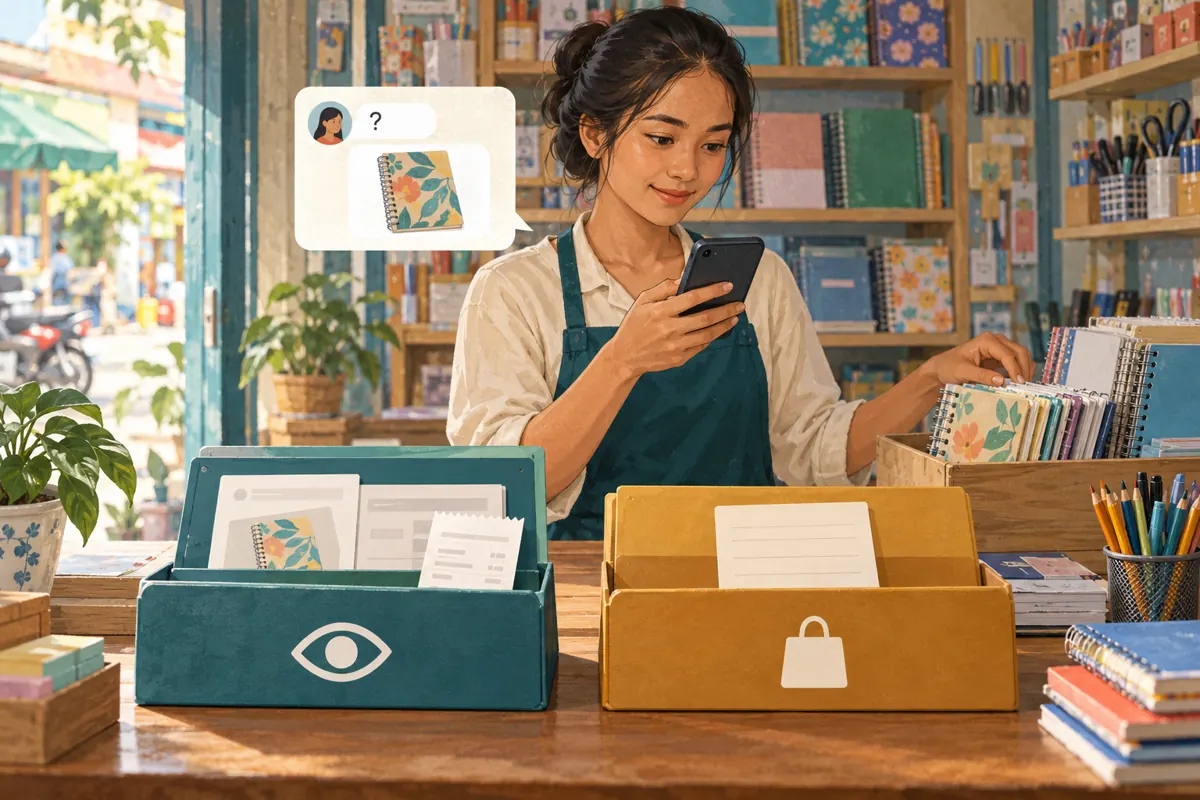
Frequently asked questions
Should the shop choose the channel with the most subscribers?
Subscriber count alone cannot establish suitability. Consider the content people joined to receive, the language used, the offer’s geographic limits, and the operator’s willingness to explain the placement. A smaller relevant channel may merit consideration, but its size does not guarantee quality either. Make the decision from the available evidence and a bounded budget.
Does Telegram Post Views include a sponsored channel post?
The supplied service name identifies post views, and its description provides no additional terms. It does not establish that content creation, channel-owner approval, publication, or Cambodian audience targeting is included. Confirm any proposed deliverable from current documentation. Never describe a view purchase as an editorial partnership or an official Telegram advertising arrangement.
What if the channel has no direct-message option?
Check its published business contact instructions. If you use another contact route, verify that the representative actually controls the channel and document the arrangement independently. Do not assume a separate payment or chat has the same mechanics as Telegram’s suggested-post feature. If the operator cannot clarify the process, leave the proposal uncommitted.
Can the operator remove the sponsorship disclosure to make the post feel natural?
Keep the commercial relationship clear. Natural wording can still identify a paid promotion and explain a useful product offer. If an edit removes or obscures the disclosure, request a revised version before approval. Do not manufacture an independent review or imply a personal recommendation simply because it might attract more attention.
What should the shop do if the promotion receives views but no useful inquiries?
First test the contact route and check whether the offer clearly states what is available and where. Then review audience fit and the questions the creative leaves unanswered. A view count cannot diagnose the problem by itself. Do not automatically purchase more views; decide whether a revised offer, different channel, or pause is better supported.
Explore the current service catalogue, create an account, or ask a specific question through support tickets.
- Telegram: Checklists, Suggested Posts and More Monetization Options for Channels
- Telegram: Direct Messages for Channels, Voice Trimming, Topic Tabs and HD Photos
- Telegram Channels FAQ
Prepared with AI assistance. Illustrations explain the workflow and do not represent customer results.