22/10/2026 08:02
Truck Delayed, Post Still Queued? Telegram Scheduling for Cambodian Seedling Shops

A seedling announcement can be beautifully prepared and still send customers to an empty collection table. The problem appears when a shop schedules tomorrow’s promotion using today’s delivery estimate. If the truck arrives late, the plants need inspection or the available varieties change, the queued message may promise something the shop cannot supply. For Cambodian nurseries promoting through Telegram, scheduling works best when it follows stock confirmation. This guide explains how to decide what belongs in the queue, check it before publication and respond when circumstances change. It also explains where an SMM panel service fits—and why a larger channel membership cannot establish that seedlings are ready or buyers are interested.
1. Separate an expected delivery from available stock
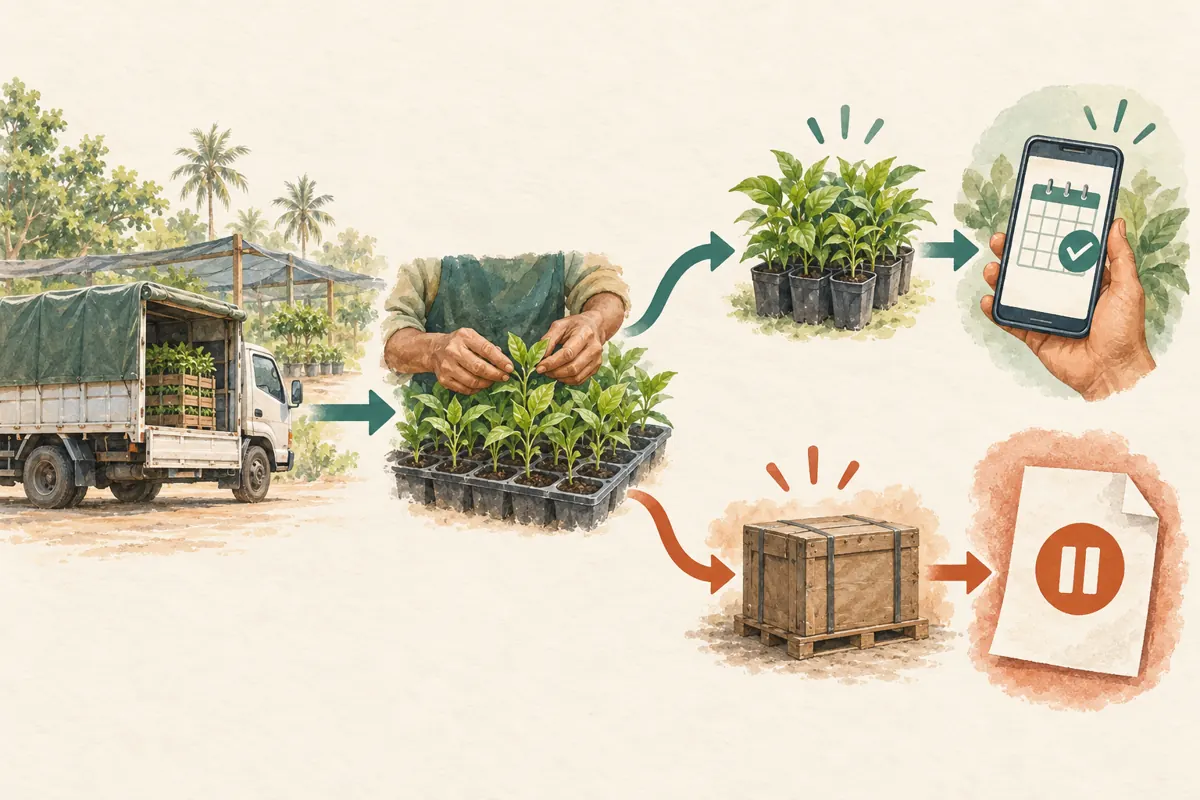
Begin with three internal states: expected, received and ready for collection. Expected means the supplier or driver has provided an estimate. Received means the trays have reached the shop. Ready means a responsible person has checked what can actually be offered, confirmed the selling unit and established when staff can serve customers. Only the final state supports an unconditional availability announcement.
In a hypothetical Battambang nursery, a supplier expects to deliver chilli and basil seedlings before opening. The shop prepares a channel post that evening, but keeps it outside the sending queue because neither variety has been inspected. After arrival, staff discover that the basil batch differs from the sample photograph. The preparation still saves time: they replace the photograph and narrow the announcement before scheduling. The useful achievement is an accurate invitation, not simply an early post.
2. Choose between scheduling, holding and publishing manually
Schedule when the important facts are already stable and the intended publication time serves a practical purpose. For example, inspected seedlings may be ready today while collection starts tomorrow after the shop prepares its counter. Hold the draft when delivery, variety, condition or price remains unresolved. Publish manually when the announcement depends on an event whose timing cannot be predicted confidently, such as completion of the arrival inspection.
This decision should also account for supervision. If nobody can review a queued post before it sends, avoid putting a fragile promise into it. An educational post showing how the shop identifies its tray sizes may be suitable for advance preparation, provided the information is accurate. A claim that a particular batch is available needs stronger confirmation. Scheduling should remove a repetitive sending task; it should not remove the person responsible for deciding whether the message is still true.
3. Prepare an announcement that survives a second reading
Write the plant variety, selling unit, confirmed collection arrangements and enquiry route before adding promotional language. Specify whether a quoted amount applies to one seedling, one pot or a complete tray. Where a photograph shows several items, explain exactly which item the offer covers. A customer should not need to infer the unit from the size of the picture or from an earlier channel post.
For Cambodian customers, have someone who uses the shop’s customer-facing language check local plant names and collection wording. Prefer an explicit date over a loose reference such as tomorrow when a message may be rescheduled. A hypothetical English drafting note might read: “Basil seedlings from the photographed batch are available for collection on the confirmed date. Message us with the quantity you need before travelling.” Translate and complete the details before approval. Do not present an enquiry as a reservation unless the shop has accepted it.
4. Schedule the approved message and inspect the queue
Telegram’s official instructions describe holding the Send button and choosing Schedule Message, then selecting a future sending time. Use this only after opening the intended destination and reviewing the complete announcement. Telegram also supports scheduling in Saved Messages, where the scheduled item acts as a personal reminder. A reminder to inspect seedlings and a channel announcement inviting customers serve different purposes. See [Telegram’s scheduling announcement](https://telegram.org/blog/scheduled-reminders-themes).
After scheduling, inspect the pending item instead of assuming the action succeeded correctly. Check the destination, date, displayed time, photograph and caption together. Telegram’s official Tips channel explains that a calendar or clock icon appears in chats containing scheduled messages and opens the pending items for review or modification. Interface details may differ across devices, so identify the control on the device your team actually uses. See [Telegram’s official scheduling tips](https://t.me/s/TelegramTips?before=223).
5. Assign a final stock check before the sending time
Give one staff member responsibility for the final decision and identify a backup. Their task is to compare the queued promise with the actual collection situation. They should check the batch, available varieties, selling unit, collection arrangements and whether somebody can answer incoming questions. Record the reviewer’s name and the decision in a short internal note, separate from the public caption.
Choose a review point that leaves enough time to correct the message. In a hypothetical shop, the owner reviews the queue after the morning inspection rather than while customers are already waiting. If the check cannot happen, the default is to hold the announcement. This is especially useful when the same person handles watering, unloading and messages: a scheduled post can otherwise leave the phone precisely when that person is least able to notice a problem.
6. Change the queue when the delivery changes
If the delivery becomes uncertain, act on the pending announcement immediately. Telegram’s scheduling documentation confirms that queued messages can be removed without sending, sent immediately or assigned a different scheduled time. For a delay, remove the unsupported announcement or move it only when a new time is defensible. Do not select an immediate-send action while trying to inspect the item. See [Telegram’s scheduled-message documentation](https://core.telegram.org/api/scheduled-messages).
Avoid repeatedly pushing the same availability promise forward by a few hours. That merely carries the original uncertainty into another slot. Return it to a draft and wait for evidence. If customers already received an earlier arrival estimate, prepare a separate factual update explaining that collection is not yet confirmed and how they can obtain the next update. Keep the explanation useful: customers need to know whether to travel, not the shop’s entire conversation with the driver.
7. Check the published result and handle mistakes openly
When the planned time passes, open the channel and inspect what readers can actually see. Confirm that the announcement appeared, the image belongs to the inspected batch and the collection details remain correct. A queue entry is a planned action; the published post is the customer-facing result. Record its reference only after checking it, especially if someone else will share the announcement.
If an inaccurate post has already gone out, correct the information promptly and make the change visible enough for affected customers to understand. For example, a hypothetical nursery might explain that collection has been postponed and ask people who arranged pickup to contact the shop. Follow up individually with customers whose arrangements are known. Do not assume changing a caption informs everyone who saw the earlier version. Also inspect later queued messages: a follow-up photograph or collection reminder may repeat the same unsupported promise.

8. Keep an SMM service decision separate from stock approval
The supplied bong-views.com catalogue includes “Telegram Channel/Group Members ~ Max 1M ~ 500k/days ~ Instant ~ 𝐍𝐎 𝗥𝗘𝗙𝗜𝗟𝗟”. The title identifies a channel/group member service and contains quantity, timing and refill labels. Its supplied description is empty, so those labels do not establish delivery quality, member activity, audience location or suitability for this nursery. Ask for clarification where a purchase decision depends on missing information.
A member service does not schedule the nursery’s announcement, check seedlings or confirm collection demand. Purchased engagement is not evidence of genuine interest, sales, advertising delivery or Cambodian users. Do not assume Telegram’s message schedule controls a panel order, either. Before considering a service, review its actual requirements and relevant platform rules, and decide whether it contributes to a legitimate objective. Declining the purchase is reasonable when the real problem is uncertain stock or unanswered customer questions.
9. Measure customer understanding without confusing the records
Keep a simple announcement log: intended publication time, final inspection decision, actual publication, any correction and the questions customers asked. Separately record accepted reservations and completed collections through the shop’s normal process. This makes it possible to identify practical weaknesses, such as repeated confusion about tray size or customers arriving before the collection counter opens.
If an SMM order exists, keep its reference and reported delivery separate from these business observations. A membership change cannot tell you whether the caption explained the selling unit. Likewise, a customer’s question does not automatically mean a sale. In a hypothetical review, several enquiries about whether pots are included would justify improving the next photograph and caption. That conclusion follows from the questions themselves; it does not require attributing them to purchased members or claiming a measured promotional return.
10. Avoid the mistakes that make scheduling unreliable
Common errors include scheduling from a supplier’s estimate, using an old batch photograph without explanation, leaving relative dates in a rescheduled caption and assuming another employee checked the queue. Another is preparing duplicate announcements on different devices or through different staff members. Maintain one approved version and confirm which person owns the pending send. When replacing a queued item, verify that the superseded version is no longer waiting to publish.
Be cautious with artificial urgency. A delayed delivery does not justify inventing scarcity, reservations or customer demand to keep a promotion exciting. Instead, give readers a clear next action supported by the shop’s situation. Over time, review the causes of changed announcements. If most changes occur before unloading finishes, move stock-dependent scheduling later in the workflow. The aim is a repeatable routine in which preparation happens early and public promises follow confirmation.

Frequently asked questions
Can we schedule an announcement before the seedlings arrive?
You can prepare the content, but an unconditional availability claim should wait for confirmation. If you publish an expected-arrival notice, make the uncertainty explicit and avoid inviting immediate collection. For a small team, holding the draft until inspection is often easier than monitoring a queued promise that depends on transport.
What should we do when the driver cannot provide a reliable arrival time?
Remove the stock-dependent announcement from the sending queue and retain its draft. Do not replace one unsupported time with another. If customers have already been given an estimate, issue a factual update and provide an enquiry route. Resume the availability announcement after the batch and collection arrangements are checked.
Should the final review happen immediately before publication?
It should happen close enough to reflect current conditions while leaving enough time to act. Choose the interval around your shop’s workload rather than a universal rule. If unloading or opening duties prevent a dependable review, publish manually after those tasks or schedule only after the stock decision is complete.
Will buying Telegram members help confirm demand for the batch?
No. A purchased membership count cannot confirm local buying interest, reservations or collection intent. Use actual enquiries and accepted orders to understand demand, while keeping their limits clear. The listed member service also provides no supplied description supporting Cambodian audience origin or nursery-specific targeting.
How do we know the workflow is improving?
Review whether announcements match available stock, whether corrections are needed and which questions recur. Look for understandable causes rather than declaring success from a single busy day. Fewer unit-related misunderstandings after clearer captions can inform your next draft, but does not by itself establish increased sales or prove an SMM service caused a change.
Explore the current service catalogue, create an account, or ask a specific question through support tickets.
- Telegram: Scheduled Messages, Reminders, Custom Cloud Themes and More Privacy
- Telegram Tips: Scheduled Messages
- Telegram Technical Documentation: Scheduled Messages
Prepared with AI assistance. Illustrations explain the workflow and do not represent customer results.