21/10/2026 19:35
Khmer Demo, English Title? YouTube Translation for Cambodian Hammock Shops
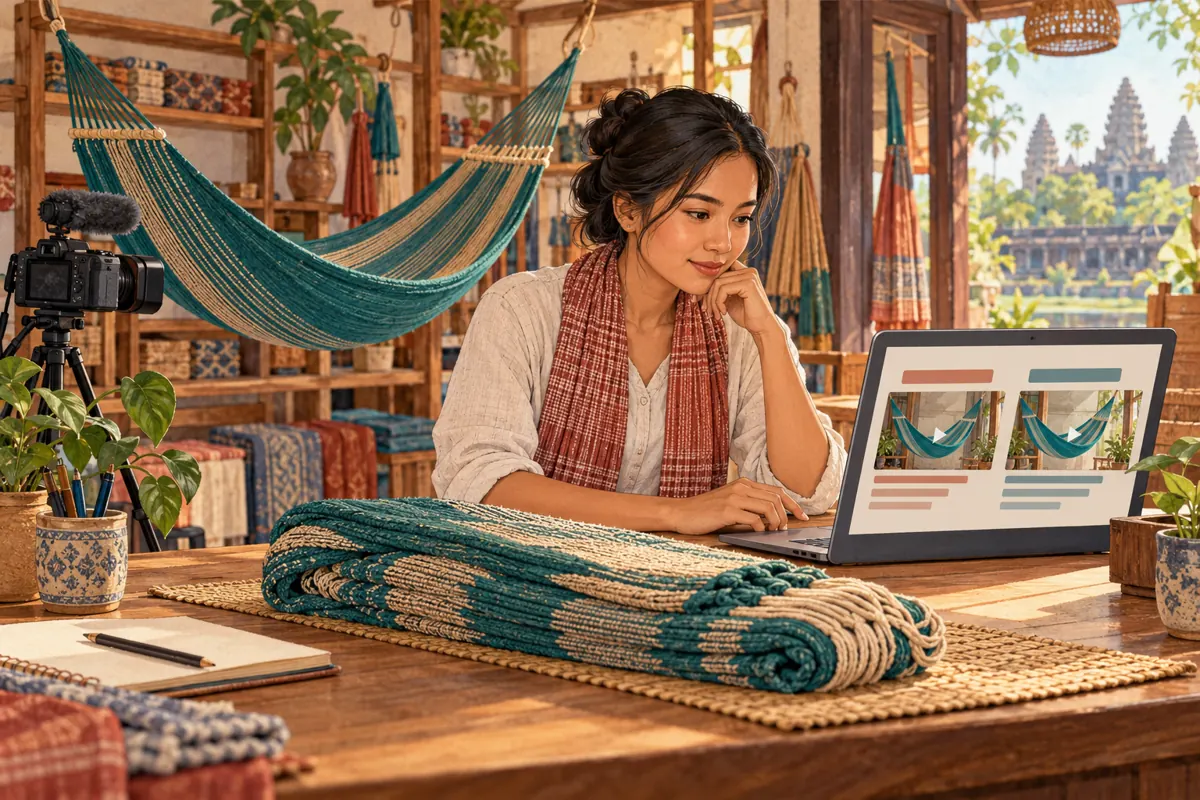
A useful hammock demonstration can lose its meaning before anyone presses play. An English title might suggest a complete hammock-and-stand package, while the Khmer explanation describes the hammock alone. A translated description might invite overseas orders even though the shop only arranges local pickup. For Cambodian businesses, translation is therefore part of preparing an accurate offer. This guide explains how to add another language to a YouTube video's title and description, check what viewers encounter, and decide whether further promotion is appropriate. The running example is a hypothetical Siem Reap hammock shop; its products, decisions and enquiries are illustrative, not customer evidence.
1. Choose the customer question before choosing a language
Start with a specific communication problem. In the hypothetical shop, staff sometimes receive English enquiries asking whether the display stand comes with the hammock. The existing Khmer demonstration explains the distinction, but its title does not help an English reader identify that answer. An English title and description could make this particular video more useful.
Write a short purpose statement: help English-reading customers understand what the demonstrated product includes before contacting the shop. This is more actionable than trying to reach everyone. Cambodia is the business context, but customer language and customer location are separate facts. An English reader may live nearby, while a Khmer reader may be abroad. Neither language establishes delivery eligibility.
2. Keep spoken language, translated titles and subtitles separate
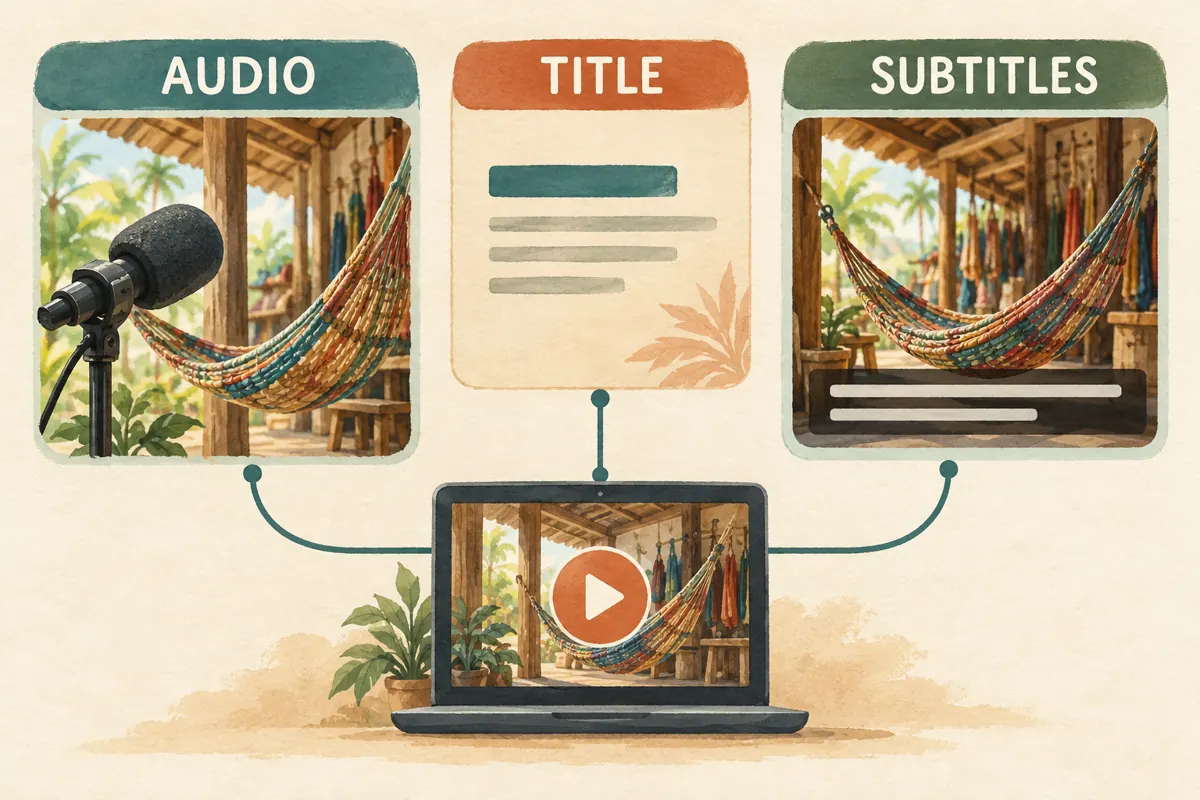
Treat the video as three related pieces: what people hear, the title and description they read, and any subtitles available during playback. Preparing an English title does not itself supply an English explanation of the spoken demonstration. A shopper who understands the headline may still need help following product details.
For the hypothetical hammock video, keep the Khmer presentation accurately identified and describe the language experience plainly. An English description could say that the demonstration is spoken in Khmer. Mention English subtitles only after checking that a reviewed track is actually available. If the video depends heavily on spoken instructions, complete that accessibility work before inviting an audience that cannot follow the original audio.
3. Prepare one approved product statement
Before translating, settle the underlying offer. Record the product shown, what is included, what is sold separately, where enquiries go, and which fulfilment arrangements staff can currently support. For a hammock, distinguish the woven body, hanging accessories and display stand. A photograph containing all three does not establish that all three are included.
In this hypothetical example, the approved statement says the video demonstrates folding a hammock for storage, the stand is separate, and customers should ask about current colours before visiting. Translate those facts together. Do not add unsupported material claims, weight limits, installation assurances or delivery promises to make the English copy sound more complete. Unknown details should return to the person responsible for the product.
4. Check the original language setting
YouTube describes the video language setting as identifying the original language and supporting language-related discovery and subtitle work. Its documented route is YouTube Studio, Content, the selected video, then Show more. Under Language and captions certification, review the language fields and save any necessary correction. Follow the field labels carefully rather than treating every language choice as interchangeable. Source: https://support.google.com/youtube/answer/6304325?hl=en
For a Khmer-speaking demonstration, do not select English merely because English-speaking customers are the next audience you want to help. Assign someone who understands the recording to verify the original language. Keep a simple preparation note with the video address, spoken language and intended translation language so another staff member can check the same video without guessing.
5. Add the translated title and description
YouTube's official instructions place this task in Studio's Subtitles area. Select the video, confirm its language if prompted, choose Add language, and select the translation language. Under Title and description, choose Add, enter the translated text and publish it. This adds a language version to the selected video. Source: https://support.google.com/youtube/answer/6289575?hl=en
Prepare the text outside the publishing fields first so the product owner can review it. A hypothetical English title is “How to Fold This Hammock for Storage — Stand Sold Separately.” Its description should identify the demonstrated item, explain the separate stand, state that the spoken demonstration is Khmer, and give the approved enquiry route. Keep the opening sentence useful rather than filling it with repeated place names or promotional adjectives.
6. Review meaning through customer decisions
Ask a bilingual reviewer to explain what an English reader would believe they can buy and do next. This catches errors that a spelling check misses. Does “set” imply accessories? Does “available” imply immediate stock? Does “delivery” suggest a service the shop has not confirmed? Compare the answer with the approved product statement, then correct the ambiguous phrase.
Use stable product identifiers where they help match the video to the shop's stock. Keep measurements and units unchanged unless a conversion is deliberately checked. Preserve the force of conditions such as “sold separately,” “ask before visiting” and “subject to confirmation.” A smooth translation that drops a condition changes the offer. Record the approved English wording so future promotional captions do not reintroduce the same misunderstanding.
7. Check the viewing experience without assuming universal display
Ask colleagues with different language preferences to open the same public video address and note the title, description and audio they encounter. YouTube lets viewers set preferred languages for audio, titles and descriptions. These preferences are separate from app language and location, so changing the interface language alone is not a complete test. Source: https://support.google.com/youtube/answer/13339776?hl=en
Record what appeared on each test device instead of concluding that every English reader will see an identical presentation. If a colleague sees the original title, first confirm that the translation was published and that the correct video was opened. Review their relevant preferences before repeatedly rewriting the title. The purpose is to catch missing or misleading content, not to manufacture a particular search position.
Finally, watch the opening with sound and inspect any available subtitles. The translated promise should match the actual demonstration. If the title promises folding instructions but the clip mostly presents colour choices, revise the promise or select a more suitable video.

8. Decide what an SMM panel can actually contribute
A language problem needs language work. The supplied bong-views.com catalogue includes the exact public name “YouTube - Views ~ 𝗥𝗘𝗙𝗜𝗟𝗟 240D ~ 20k-50k/Days ~ [ 𝐒𝐨𝐮𝐫𝐜𝐞: Suggested + External ] ~ INSTANT”. This is presented as a views listing, not a translation service. Its supplied description is empty, so the title does not independently verify delivery methods, timing, retention or audience characteristics.
Do not interpret that listing as a way to obtain English-speaking Cambodian buyers or validate a translation. Purchased engagement is not evidence of genuine interest, sales, ad delivery or Cambodian users. A service name also does not establish official YouTube affiliation. If the task is correcting product language, finish that task directly rather than substituting a metric purchase.
YouTube prohibits artificial increases in views and other engagement, and explains that a hired promoter's actions can affect the channel. Reject methods that artificially inflate metrics; an unclear method is a reason to pause the purchase. Do not place promotional links to artificial-engagement services in the video's description. Source: https://support.google.com/youtube/answer/3399767?hl=en
9. Run a small communication review
Once the language versions are ready, share the video where the explanation is relevant and welcome, such as an existing conversation with someone asking about the stand. Use an introduction that tells them why the clip answers their question. Avoid posting the same link into unrelated groups simply because members might read English.
Keep a short enquiry log focused on understanding: which item the person meant, whether they thought the stand was included, and which condition needed another explanation. Record only the information necessary for this review. Staff can then identify a wording problem without collecting unnecessary personal details or turning every conversation into a sales claim.
Choose a manageable review period and note other changes made during it. If staff also change the thumbnail, stock selection and sharing locations, they cannot confidently attribute different enquiries to the translated title alone. Useful feedback can justify a clearer sentence even when there is too little evidence to claim a performance improvement.
10. Maintain both versions when the offer changes
Translations create an ongoing editing responsibility. Assign one person to check every published language version when product inclusions, pickup arrangements or contact details change. For the hypothetical shop, adding an optional stand package would require reviewing both descriptions and the surrounding promotional copy. An old English sentence should not continue presenting a previous offer.
Common mistakes include replacing the Khmer title with English without considering existing viewers, promising English narration that is absent, and copying a translated description onto a different product video. Another mistake is treating a higher view count as proof that customers understood the offer. Keep the correction process tied to the actual product and customer questions. Recheck the public video after saving changes, then update the shop's approved wording.
Frequently asked questions
Should a Cambodian shop replace its Khmer title with an English one?
Not automatically. Decide whom the existing video serves and which additional readers need help. For this workflow, the shop retains its original presentation and adds an English title and description through YouTube's translation fields. Both versions should describe the same product and conditions. Translation should improve understanding without making the original audience's experience an afterthought.
Can we add an English title before English subtitles are ready?
You can prepare the title and description separately, but assess whether the video is useful without understanding its speech. A clearly visible folding demonstration may still help some viewers when its language is disclosed. A spoken explanation of essential product limitations needs an accessible explanation before broader promotion. Never claim that English subtitles exist until you have checked them.
Does an English description mean we should accept overseas orders?
No. Language access and fulfilment coverage are different decisions. State the arrangements your shop can actually support, whether that means local pickup or delivery confirmed individually. If an overseas viewer enquires, answer according to those arrangements. Do not let a translator expand the shipping promise simply because the description now addresses English readers.
What if a reviewer still sees the Khmer title?
Check that the English version was published on the intended video, then examine the reviewer's language preferences and record their viewing context. Preferred language settings are distinct from interface language. One person's display does not establish what all viewers see. Resolve a missing translation before making speculative changes to otherwise accurate product wording.
How should we judge whether the translation helped?
Look for clearer product conversations: can people identify the hammock, understand that the stand is separate, and follow the enquiry route? Record misunderstandings and revise the wording that caused them. Views alone cannot answer those questions, and purchased engagement cannot validate comprehension. Describe observed feedback honestly without claiming that the translation caused sales or audience growth.
Explore the current service catalogue, create an account, or ask a specific question through support tickets.
- YouTube Help: Translate your own video titles and descriptions
- YouTube Help: Change the language of your uploaded video
- YouTube Help: Watch videos in your preferred language
- YouTube Help: Fake engagement policy
Prepared with AI assistance. Illustrations explain the workflow and do not represent customer results.