21/10/2026 15:52
Review Link or Public Launch? YouTube Visibility for Cambodian Fan-Repair Workshops

A repair demonstration can be ready for a technician to check while still being unsuitable for customers to watch. Perhaps the explanation promises more than the workshop offers, a customer’s collection slip appears behind the fan, or the closing message gives an outdated pickup arrangement. Sending that video for review should not accidentally become its public launch. For Cambodian workshops promoting their services through YouTube and other social channels, a deliberate visibility decision keeps technical review, customer communication and promotion connected. This workflow explains how to choose a review audience, collect precise corrections and release an approved demonstration. It also shows where an SMM-panel proposal needs separate scrutiny: access to a video does not establish that a promotion method is appropriate or effective.
1. Decide what the reviewer must approve
Begin with a narrow purpose for the video. A fan-repair workshop might want customers to understand what to bring for an initial assessment. That is different from teaching electrical repair or promising a particular diagnosis. Write the intended customer action before filming: bring the fan and describe the symptom, contact the workshop about collection, or ask whether the model can be assessed.
Assign review questions to people who can answer them. The technician checks whether the explanation accurately represents the work. The person handling enquiries checks the contact instructions and service area. A Khmer-speaking colleague checks whether the spoken wording is natural and understandable. Give one person responsibility for deciding whether all required corrections are complete; several casual expressions of approval can otherwise leave a serious question unresolved.
2. Understand the three visibility choices
YouTube distinguishes private, unlisted and public videos. Private access is limited to the owner and chosen viewers, and private videos do not support comments. Unlisted videos can be watched and reshared by anyone holding the link; viewers do not need a Google Account. They generally stay out of search, but inclusion in a public playlist is an exception. Public videos are available to anyone and can appear in search and related videos. These distinctions come from YouTube’s official visibility guidance, listed in the sources.
Choose according to the consequences of someone outside the review team watching. A harmless draft that still needs a clearer introduction presents a different problem from footage containing customer details. If forwarding would cause a problem, do not select an access arrangement merely because it is convenient. Remove unnecessary sensitive material before uploading whenever possible.
3. Apply the decision to a realistic workshop scenario
Consider a hypothetical workshop in Phnom Penh preparing a demonstration about bringing a noisy tabletop fan for inspection. Its first cut includes a repair ticket behind the presenter and a closing statement that suggests every repair can be completed immediately. Neither detail belongs in the customer-facing version. The owner first removes the ticket from the footage and asks the technician to revise the promise.
After those changes, the remaining question is whether the Khmer explanation makes the assessment process clear. The owner could choose an unlisted review if everyone accepts that the link may travel beyond the intended recipients. If access must remain limited to named reviewers, private sharing is the better fit. The decision depends on the material and review needs, not on whether the workshop hopes to promote the finished video later.
4. Prepare a review copy that is safe to circulate
Inspect the whole frame, including reflective surfaces and the background. Workbenches can contain collection slips, personal phone screens or labels attached to customer appliances. Listen for names and contact details spoken off camera. A tidy opening shot is insufficient if the camera later turns towards the service counter. Use a workshop-owned demonstration item where practical, and avoid presenting it as a customer success story.
Review the offer as carefully as the picture. Explain whether the video shows an assessment, a cleaning service or a particular repair example. Avoid allowing a demonstration of one fan to imply that all models receive identical treatment. If costs or completion times depend on inspection, make that dependency understandable. These corrections improve the eventual promotion and reduce the amount of unfinished information reviewers must interpret.
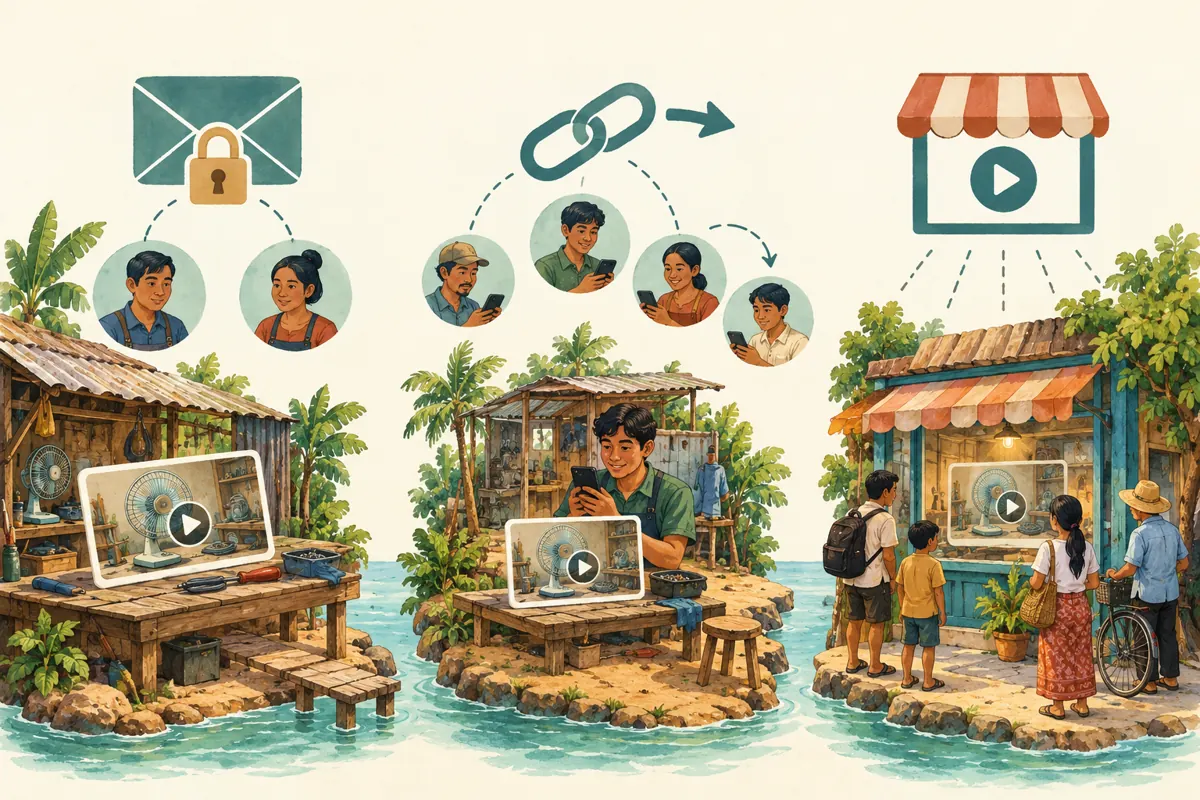
5. Set access deliberately and send a useful invitation
On a computer, YouTube’s documented route is YouTube Studio, Content, the video’s Visibility control, the selected setting, then Save. For private sharing, open the video’s Visibility box, select Share privately, enter the reviewers’ email addresses and save. Check the selected setting rather than relying on memory or assumptions about upload defaults.
Send a short review brief alongside the access instructions. In the hypothetical workshop, it could ask: Does the explanation distinguish inspection from a confirmed repair? Is the pickup instruction correct? Is any customer information visible or audible? Add a deadline expressed in Cambodia time and identify who will collect the responses. Tell recipients that this is a review request and that public sharing requires the workshop’s release decision.
6. Collect corrections that someone can act on
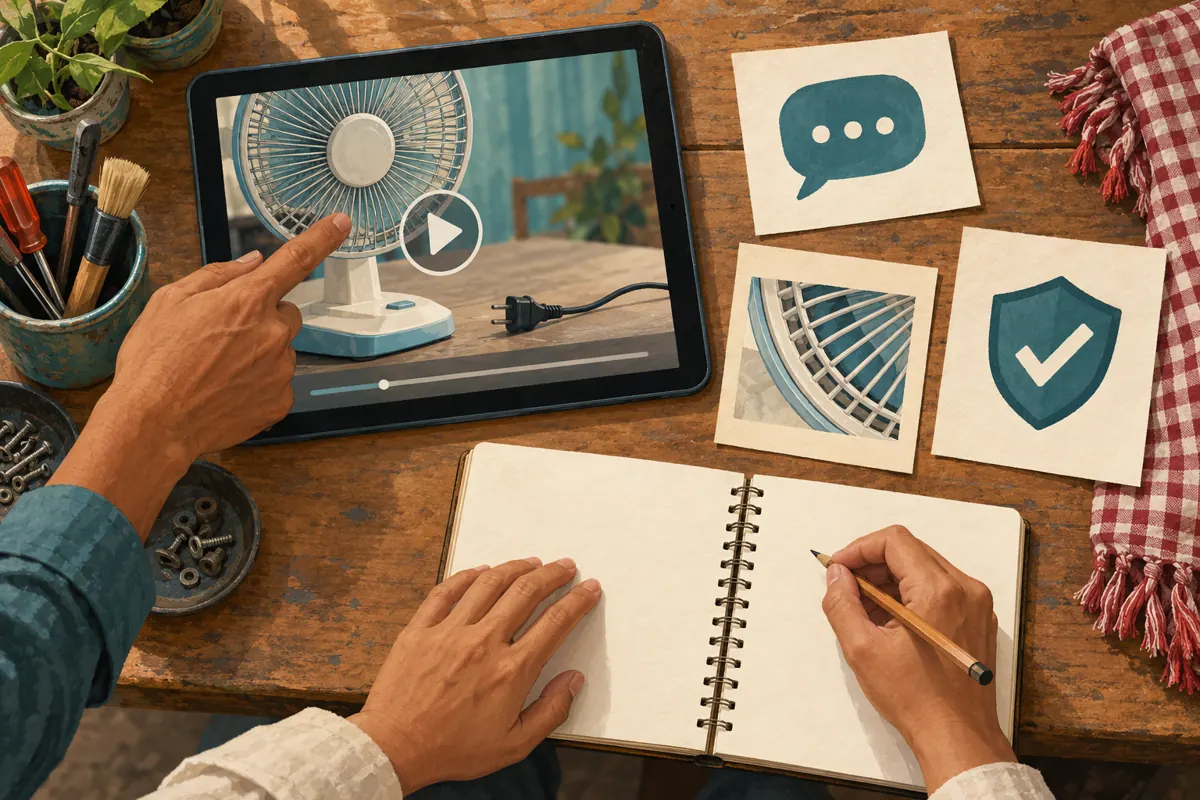
Use a separate message thread or review sheet when working with a private copy. Ask each reviewer to identify the moment in the video, describe the problem and propose the intended meaning. For example, a hypothetical note could say: At the closing invitation, replace the immediate-completion promise with an explanation that the technician assesses the fan first. This gives the editor a specific correction without asking them to invent the service terms.
Separate required corrections from preferences. A wrong collection location blocks release; a preference for a different opening angle may not. Record who can resolve each issue and whether the corrected passage has been checked. Keep Khmer wording intact when passing notes between colleagues, and explain any English model names separately. An enthusiastic response such as “looks good” should not silently override a technician’s unresolved factual concern.
7. Make the release decision explicit
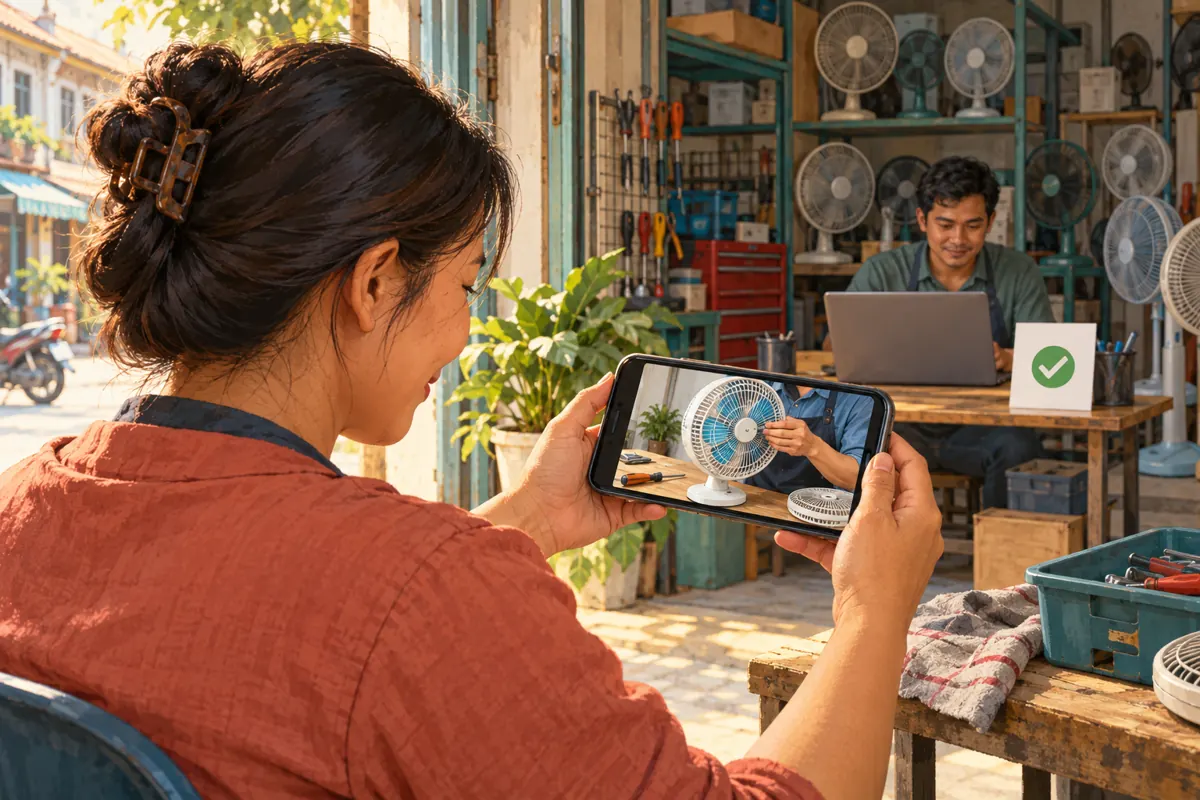
Before promotion, compare the final viewing copy with the review notes. Watch the revised passage in context, because a correction can make the next sentence confusing. Confirm that the title, thumbnail and closing invitation describe the same service. Record the approved video link, approval date and person responsible. A small workshop can keep this in a simple shared note; it does not require a complicated approval system.
For a public launch, change visibility only after this check. Open the intended customer link from a browser session that is not using the channel owner’s account. Verify playback, the visible offer and the route for making an enquiry. This is an access and comprehension test, not a reach test. If the wrong draft opens, stop sharing and resolve the reference before asking anyone to promote it.
8. Evaluate an SMM-panel proposal separately
The supplied catalogue includes the exact service name “Youtube - Native Ads Views ~ 𝗥𝗘𝗙𝗜𝗟𝗟 30D ~ 10k-100k/days ~ INSTANT”. Its category identifies a YouTube views offering, but the supplied description is empty. The title alone does not verify the delivery method, advertising placement, speed, refill conditions or audience location. It also does not establish an official relationship with YouTube. Treat those words as a listing label that requires explanation, not as evidence.
YouTube’s fake engagement policy prohibits artificially increasing engagement metrics and warns that a hired promoter’s actions can affect the channel. Before purchasing, ask what the provider actually does and whether it can substantiate a compliant method. If the method remains unclear or depends on artificial inflation, decline it. Do not make restricted footage public simply to satisfy a purchase requirement. Purchased engagement does not demonstrate genuine interest, sales, ad delivery or Cambodian viewers.
9. Promote the approved explanation with honest context
Build the sharing message around the customer question the video answers. For the hypothetical workshop, that could be what information to provide before bringing in a noisy fan. State the actual location and service arrangements where relevant. A helpful invitation gives readers a reason to watch without suggesting that watching guarantees a diagnosis, an available replacement part or an immediate repair.
Use the same approved destination in the workshop’s planned social posts and partner instructions. Ask legitimate promotional partners to describe where and how they will present the video, rather than accepting a vague promise of exposure. Record subsequent enquiries according to what customers actually ask. Questions about model compatibility or collection arrangements can guide the next explanation, while a changed view counter alone cannot tell the workshop whether its message was understood.
10. Correct common mistakes before they spread
The most common mistake is treating a hard-to-find link as confidential. Another is confusing permission to review with permission to distribute. Prevent both by choosing access intentionally and stating the recipient’s task. Also avoid using a public upload as a temporary review room simply because colleagues find it easier to open. Convenience should be considered alongside the consequences of premature circulation.
If a draft is shared accidentally, first assess what it contains and limit further access where appropriate. Tell the people who distributed it which version they should use and ask them to correct their posts. Do not assume changing a setting retrieves copies already made. If the problem is an inaccurate service promise, address that promise directly in the affected communication. Resume promotion only when the approved explanation and the shared destination agree.
Frequently asked questions
Should a Cambodian workshop always use private videos for review?
No. Choose according to the material and the consequences of wider circulation. A workshop may accept link forwarding for an ordinary demonstration after removing sensitive details. A restricted review is more appropriate when access must be limited to selected people. The useful first question is what could go wrong if someone outside the team watched, rather than which setting saves the most clicks.
What if a reviewer cannot open the draft?
Check that you sent the intended video reference and used the access arrangement you meant to use. Confirm the reviewer’s details where relevant. Do not immediately loosen access as a troubleshooting shortcut. If the technical review is urgent, a supervised viewing at the workshop may resolve the immediate question while you investigate the sharing problem.
Does technical approval mean the video is ready for promotion?
Technical approval answers only part of the release question. Someone still needs to check the service promise, customer information, language, contact instructions and final destination. A technician might correctly approve the explanation of an assessment while overlooking an outdated collection message. Use separate review responsibilities, then have one person confirm that all required checks are complete.
Can an SMM service name prove the video will reach Cambodian customers?
No. A catalogue name does not establish who will watch, why they will watch or whether they can use the workshop’s services. An advertising-related phrase also needs supporting evidence about the delivery method. For this article’s supplied listing, the description provides no such explanation. Ask for substantiation before considering a purchase, and avoid drawing customer-demand conclusions from purchased metrics.
How should a workshop judge whether this review process helped?
Look for concrete editorial improvements: an incorrect promise removed, clearer Khmer instructions, a resolved access problem or fewer ambiguous enquiry directions. After release, examine the substance of genuine customer questions and whether staff can answer them consistently. Those observations can guide further improvements without claiming that the review process caused sales or that a particular view total proves success.
Explore the current service catalogue, create an account, or ask a specific question through support tickets.
Prepared with AI assistance. Illustrations explain the workflow and do not represent customer results.