19/10/2026 19:29
Is Your Workshop Demo Commercial Content? A TikTok Disclosure Workflow for Cambodian Furniture Shops

A furniture-refinishing video can teach something useful while also selling a service. Showing how a worn chair becomes usable again helps viewers understand the work, but an invitation to request a quote gives the clip a commercial purpose. For Cambodian workshops, that purpose should be clear before the video enters a promotion plan. This guide follows a hypothetical Phnom Penh refinishing shop preparing a TikTok demonstration. It explains how to identify the commercial relationship, review disclosure settings, prepare an honest offer and decide whether a proposed SMM service addresses the business need. All workshop scenarios below are illustrative, not customer stories or measured results.
1. Identify what the demonstration is asking viewers to do
Begin with one sentence: this video helps viewers understand a refinishing decision and invites suitable customers to contact our workshop. That sentence gives the editor a concrete purpose. A close-up of sanding might explain preparation, while the closing scene explains how someone can request an assessment. Decide both parts before filming so the commercial invitation does not appear as an unrelated instruction at the end.
In the hypothetical shop, the owner demonstrates a scratched dining chair and asks viewers to send a furniture photo for an initial discussion. The practical question is whether the chair needs surface refinishing or a more involved repair. The video should help viewers recognize that distinction without pretending they can obtain a final diagnosis from a short clip. A useful demonstration sets expectations about the conversation that follows.
2. Establish who benefits and who provided an incentive
Write a short relationship note before choosing settings. Identify the publishing account, the business being promoted and any payment, gift, discount or other benefit tied to the post. Keep this note factual. For example, the workshop owns the account, supplies the chair and is inviting enquiries for its own refinishing work. A second arrangement might involve a separate creator receiving a free refinishing service in exchange for making a video.
TikTok’s commercial-disclosure guidance covers promotion of your own business as well as promotion of another business in exchange for payment or incentives. Its Help Center distinguishes the Promotional content label for your business from Paid partnership for third-party branded content. Use the actual relationship to make the choice. A friendly relationship with a creator does not explain whether their demonstration was independently chosen or connected to a benefit.
3. Give collaborators a brief they can use
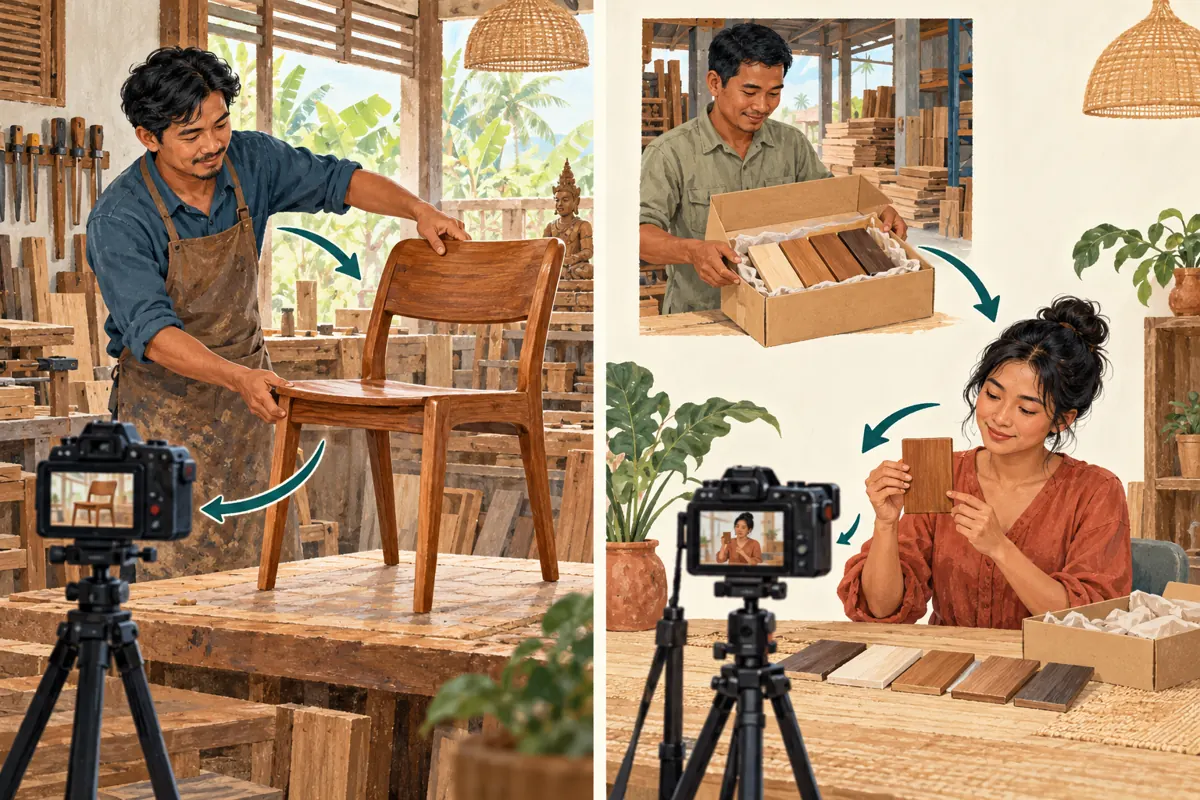
For a hypothetical creator collaboration, agree on the useful question before discussing the finished edit. The brief could ask the creator to show the chair’s condition, explain what work the workshop agreed to perform and show the result under comparable lighting. Record what the creator received and what they promised to produce. Avoid instructions requiring praise, invented satisfaction or statements about durability they have not tested.
Keep factual review separate from personal opinion. The workshop can correct the name of a finish or explain that structural repair was outside the agreed work. It should not rewrite a creator’s genuine reservations into an endorsement. Also identify who will check the final disclosure choice. One named reviewer is more reliable than assuming the camera operator, editor and shop owner will each notice a missing detail.
4. Make the commercial purpose understandable in the video
Prepare a plain introduction that fits the relationship. For the owner’s video, an illustrative opening is: our workshop is showing how we assess a chair before quoting for refinishing. For an incentivized creator video, the creator can explain what the workshop provided. These statements help viewers interpret the demonstration. Write them in the language the intended customers understand; a Cambodian workshop serving Khmer-speaking customers should review the Khmer wording with the person delivering it.
Show the same furniture throughout the demonstration unless a change is explicitly explained. Keep camera angle and lighting reasonably consistent when comparing surfaces. Describe what the footage establishes: a visible change in appearance, a particular preparation step or an example finish. Do not turn a polished final shot into a promise that every wood type, old coating or damaged chair will respond in the same way.
5. Review TikTok’s setting before publishing
TikTok’s Help Center describes this posting route: open Content disclosure and ads, sometimes under More options, enable Disclose commercial content, select Your brand or Branded content, then save and confirm. It also documents adding disclosure from an existing post through More options and Ad settings. Check the wording in your current app before completing the post.
TikTok says an applied disclosure label cannot be changed after publication; correcting a wrong selection may require removing the post and creating another. Review the relationship note alongside the final draft before publishing. In the workshop’s internal record, keep the approved clip name, intended disclosure category and reviewer. This is a proposed editorial habit, not a TikTok form. It gives the person posting enough context to resolve uncertainty before a public link is shared with collaborators.
6. Treat advertising permission as a separate decision
TikTok’s guidance for creators explains that tagging a brand partner can support discovery, access to video analytics and authorization for advertising use. Read the permission screen carefully rather than treating every available option as a necessary part of disclosure. A workshop and creator should agree on intended advertising use before someone grants it. Record the approved account, video and duration in their collaboration notes.
For the hypothetical shop, a creator might agree to publish a demonstration but leave any later advertising arrangement for a separate discussion. The workshop should budget and plan around the permission actually granted. It should also retain the original footage and approved wording so a later proposal can be reviewed against a known version. Clear boundaries make it easier to discuss reuse without arguing about what an informal message supposedly meant.
7. Decide whether an SMM service fits the problem
The supplied bong-views.com catalogue includes the exact public title TikTok Save ~ Max Unlimited ~ 1M/Days ~ Instant ~ 𝐍𝐎 𝗥𝗘𝗙𝗜𝗟𝗟. Its title identifies a save-related service, but the supplied description is empty. The title alone does not verify delivery conditions, audience location, genuine customer intent or platform authorization. Treat its quantity and timing language as catalogue claims requiring clarification, not facts established by this article.
TikTok’s Community Guidelines prohibit services that artificially increase engagement and say inflated signals may be removed. A disclosure label does not make artificial engagement compliant. For this workshop scenario, the sensible decision is to avoid a save purchase and improve the demonstration and enquiry route. Purchased engagement cannot establish Cambodian viewers, genuine interest, ad delivery or sales. If the problem is that people do not know which furniture photos to send, an additional metric cannot supply the missing instructions.
8. Prepare the enquiry the video promises
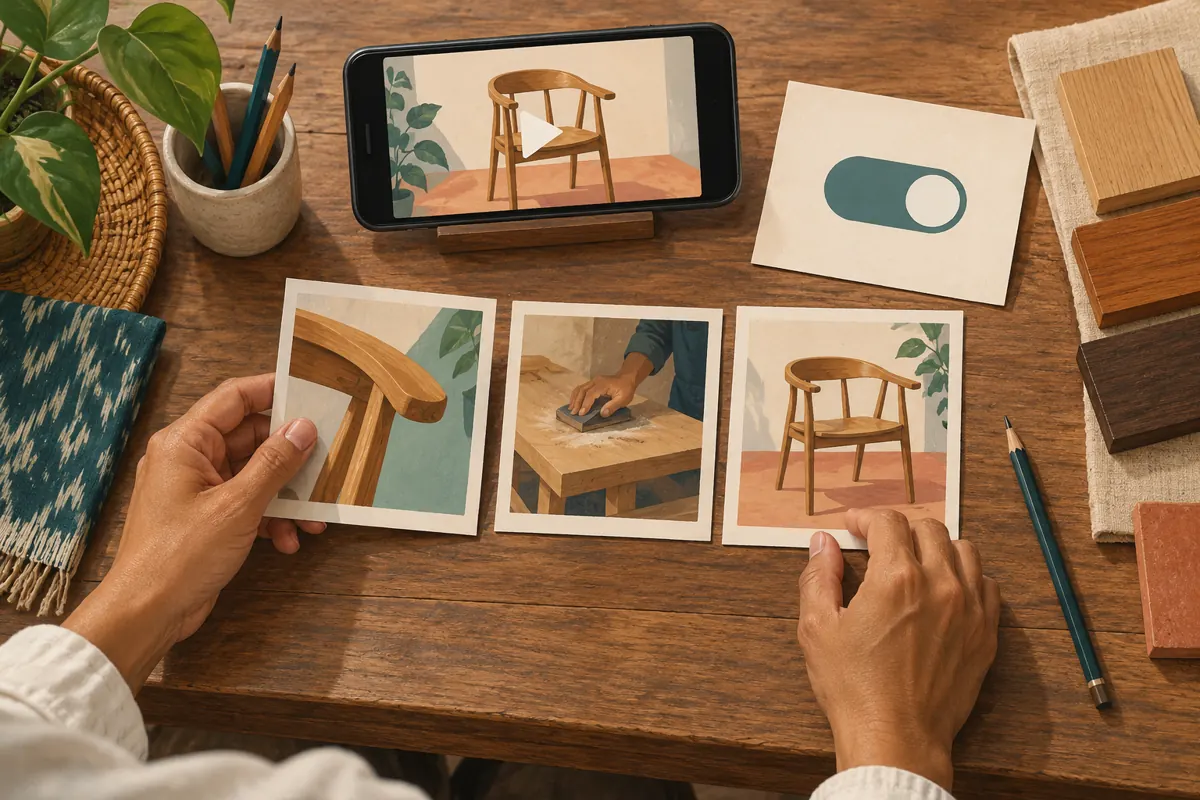
Make the next step specific enough for a viewer to complete. The hypothetical workshop could request a full view of the furniture, a close-up of the damaged area, approximate dimensions and the district where collection would be needed. Ask customers to send these through the shop’s stated contact route rather than posting private addresses publicly. Explain that an initial discussion may still need an inspection before a final quotation.
Assign someone to review incoming questions during the period when the shop is actively sharing the video. Prepare a response for work outside the service area and another for damage the workshop cannot assess from photographs. Confirm whether collection is available before mentioning it. For a business operating around Phnom Penh, an unclear transport promise can create more friction than an imperfect camera angle. Promotion is more useful when the promised conversation is ready.
9. Catch mistakes before they become promotion habits
A common editorial mistake is copying the previous video’s settings without checking whether the relationship changed. An owner demonstration and a creator collaboration may use similar footage while involving different arrangements. Another mistake is describing a supplied service as an independent discovery. Read the script, caption and relationship note together; if they imply different stories about how the video came about, revise them before publication.
Avoid assuming that a disclosure setting verifies the whole offer. The workshop still needs to explain limitations, preserve honest comparisons and confirm any claims about materials. If a disclosure notification appears, read the in-app instructions promptly. TikTok’s creator guidance describes responding through disclosure or an appeal where appropriate, with appeals made by the original poster. Keep promotion paused while the responsible account owner resolves uncertainty instead of trying to bury the issue under additional activity.
10. Review understanding and enquiries after publication
After posting, check whether viewers understand the offer. Record recurring questions in plain language: can you work on veneer, do you collect from this district, or does the shown finish change the wood’s colour? These questions can guide a follow-up demonstration. Keep a separate record of enquiries that contain enough information for assessment, along with the next action and whether the customer still needs a reply.
Do not describe every save, view or message as a potential sale. Someone may appreciate the craft without owning furniture that needs work. A useful review asks whether the video brought the right questions and whether the shop answered them clearly. If customers repeatedly misunderstand the same limitation, change the explanation. If the content is understood but collection is unavailable, revise the offer. Choose the next action from the actual problem.
Frequently asked questions
What if the workshop only wants to teach a technique?
Review the complete post, including its caption and invitation to contact the business. A practical lesson can also serve a promotional purpose. For an uncertain draft, write down what the viewer is being encouraged to do and consult TikTok’s current commercial-content guidance. Avoid deciding from the presence or absence of a price alone.
What if a friend makes the video without a cash payment?
Clarify whether the friend received anything connected to producing the post, such as free work or a discount. Record that arrangement before reviewing the draft. Friendship is useful context for the team, but viewers need an accurate explanation of the commercial relationship. Do not script the video as an independent customer recommendation if that is not what happened.
Will disclosure guarantee that the video reaches local customers?
No. TikTok says disclosure does not affect how it recommends content, but that does not promise reach or Cambodian enquiries. Plan around the audience’s practical needs: understandable language, recognizable furniture problems, an accurate service area and a clear contact step. Judge results using actual questions and service requests rather than assuming the label delivers an audience.
Should a wrong disclosure choice be fixed before sharing the link?
Yes. Review the correction route described in the Help Center before distributing the post more widely. If correction requires a replacement post, tell collaborators which link is now approved and update any planned references. Keep a brief note explaining the replacement so staff do not continue sending customers to an obsolete version.
Can an SMM panel confirm that viewers want refinishing work?
A service-order record cannot establish that intention. Even an ordinary engagement counter does not tell the workshop whether someone owns suitable furniture, lives within its service area or wants a quotation. Look for voluntary enquiries containing relevant details, then ask follow-up questions. Keep any purchased activity separate from conclusions about demand.
Explore the current service catalogue, create an account, or ask a specific question through support tickets.
- TikTok Help Center: Promoting a brand, product, or service
- TikTok Business Help Center: About the Commercial Content Disclosure setting for creators
- TikTok Community Guidelines: Integrity and Authenticity
Prepared with AI assistance. Illustrations explain the workflow and do not represent customer results.