22/10/2026 02:40
What Should Visitors See First? Instagram Pinned Posts for Cambodian Shoe-Repair Shops

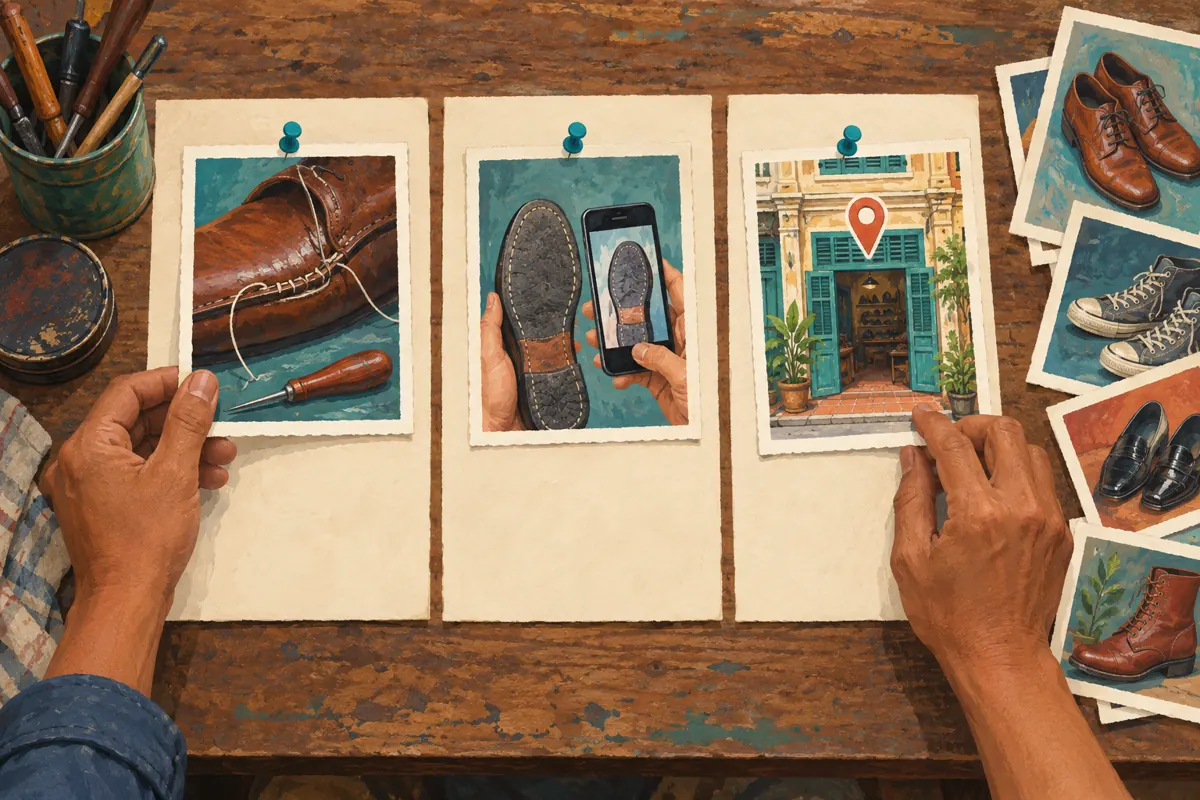
A polished shoe photograph can attract attention without answering the question that brought someone to your profile: can this shop assess my damaged pair? For a Cambodian shoe-repair business, selected introductory posts can make the next step clearer before you promote the account. This guide uses a hypothetical Phnom Penh workshop to explain a practical workflow: choose posts that describe repair scope, demonstrate useful enquiry photos and explain visit arrangements. It also shows where an SMM panel catalogue belongs in the decision process. A purchased metric cannot establish that visitors understood your offer, live nearby or intend to book a repair.
1. Give the pinned posts a customer-service purpose
Meta’s official announcement describes pinning up to three feed posts or Reels at the top of an Instagram profile. It explains opening your own post, selecting its three-dot menu and choosing the profile-pinning option. A pin symbol identifies the selected post, and the same menu provides an unpin option. Check the wording shown in your current app. These controls concern profile placement; they do not constitute an advertising purchase.
Treat the available space as an introduction for someone unfamiliar with the workshop. In our hypothetical example, customers often ask whether detached soles can be assessed, what photographs to send and whether they should visit without arranging a time. Those questions give the shop a useful starting structure. Select posts that help answer them, even when a different photograph has attracted more attention. The editorial test is simple: after reading this post, does a visitor know something necessary for their next decision?
2. Audit the existing posts before making new ones
Review a manageable selection of existing posts and write down the question each answers. A close-up of stitching may demonstrate a technique, while an entrance photograph may help someone recognise the shop. A festival greeting may be attractive but provide little lasting guidance. Beside each candidate, note any conditions that have changed: accepted repair types, contact instructions, opening arrangements or collection procedures. Check the image and the caption together.
Then sort candidates into ready, revise and unsuitable. A clear repair explanation with current conditions may be ready. An otherwise useful post with an obsolete collection promise needs revision. A customer photograph lacking permission should not become a prominent introductory post. Do not force three selections when only two are accurate. Missing information is a reason to prepare a useful new post, rather than fill the space with a vaguely related image.
3. Use one post to explain what the shop can assess
The first candidate should define the work customers may ask about. For the hypothetical workshop, this could be a photograph of a loose sole edge alongside an explanation of its assessment process. Avoid turning one successful repair into a promise that every similar shoe can be restored. Material condition, construction and previous repairs may require inspection. Describe the shop’s actual scope in ordinary language, with the owner checking every service claim.
A hypothetical caption could say: “Send a clear picture of the damaged area so we can discuss whether an inspection is worthwhile. We confirm the proposed work and price after checking the shoes.” Adjust this to the business’s real procedure. If cleaning, colour restoration or replacement parts are outside its scope, clarify the relevant boundary. The purpose is to help customers recognise a suitable enquiry, while preserving the distinction between an initial conversation and an accepted repair.
4. Make the second post a useful photo-enquiry guide
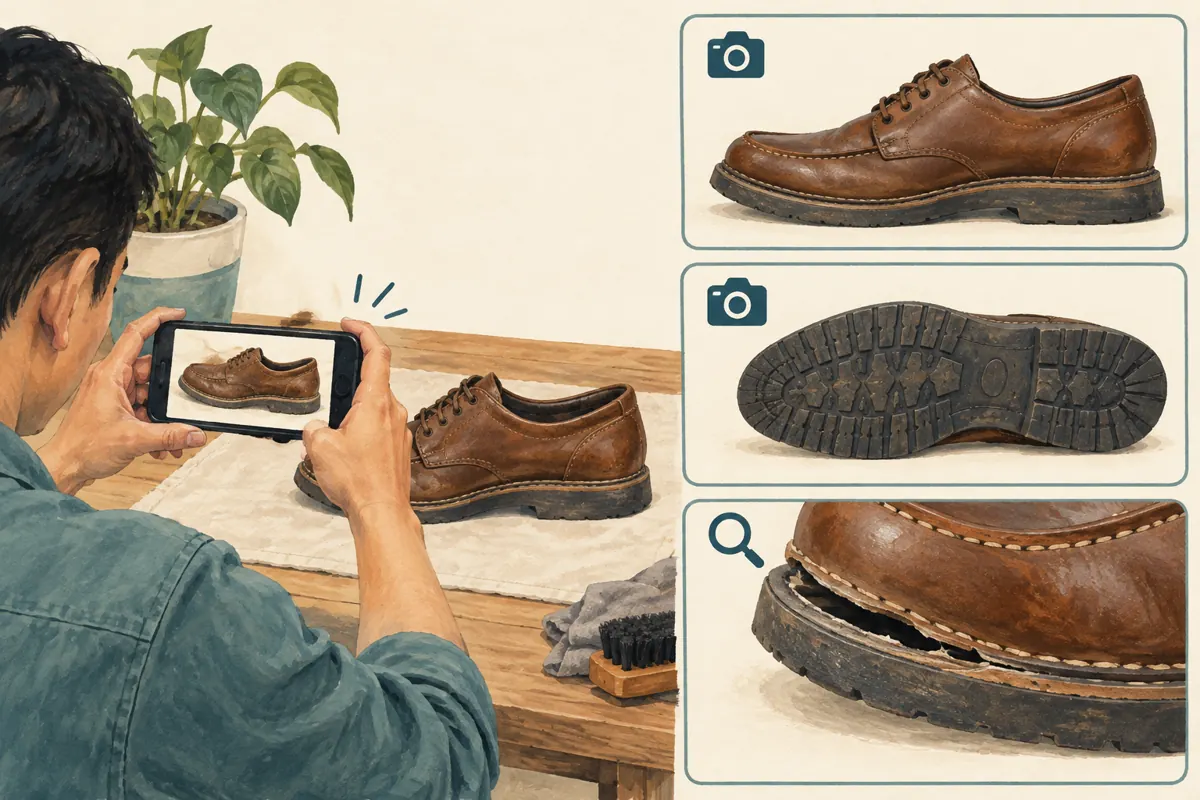
Instead of repeatedly asking customers for another angle, prepare a visual guide showing the whole shoe, the sole and the specific damaged area. Use a shop-owned sample and demonstrate comfortable lighting and a plain background. A close-up should reveal the problem without making the customer guess which part they are seeing. Keep surrounding receipts, addresses and identifying labels outside the frame. This is practical communication guidance, not a promise that photographs replace inspection.
For the hypothetical shop, the caption might ask customers to describe what happened and whether the shoes have already been repaired. Request only information that helps the assessment. State where to send the photographs and which contact route the team actually monitors. If customers commonly use Khmer, prepare the customer-facing instructions in natural Khmer and have a fluent colleague review them. English can be added where useful, but the key request should remain easy for the intended audience to understand.
5. Reserve another post for a realistic visit or handover
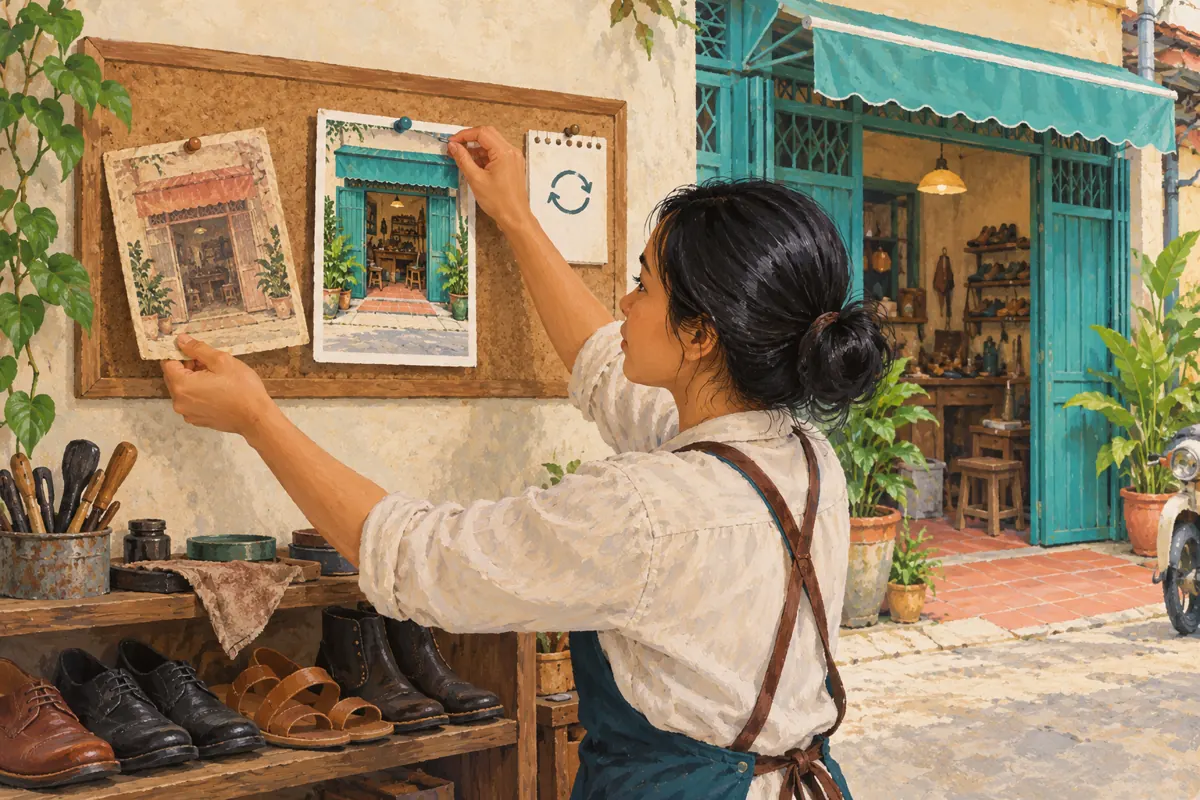
A visitor may understand the repair service and still be unsure how to reach the workshop. Choose a current entrance photograph, a clear location description and accurate visit instructions. For a shop inside a shared building, explain the relevant entrance rather than relying entirely on a decorative exterior shot. Include a recognisable nearby landmark only when it genuinely helps. Confirm that any contact details shown belong to the business and are intended for public use.
Keep assessment, drop-off and collection arrangements distinct. A hypothetical instruction such as “Message before bringing your shoes so we can confirm someone is available to inspect them” does not promise an immediate repair. Likewise, a collection photograph should not imply that every order is ready. If a holiday, relocation or temporary access change affects visits, review this post promptly. Useful directions can become misleading even while the photograph remains visually appealing.
6. Pin the selections and test them as separate posts
Once the content is approved, use the pinning option on the selected posts and inspect the resulting profile. Open each post again to check that the intended image, explanation and contact instruction appear together. Confirm the visible arrangement in the app instead of designing a sequence that depends on an assumed ordering rule. If the control is unavailable, consult Instagram’s help guidance and continue improving the underlying content while resolving the interface issue.
Ask a colleague who did not prepare the posts to find the repair scope, photo instructions and visit details. Let them start with whichever post catches their attention. Each should make sense independently. Avoid splitting one sentence or essential instruction across three grid images: a person may open only one. Check that small preview crops still suggest the subject, and that opening a post reveals the qualifications needed to interpret it correctly.
7. Decide whether an SMM service addresses the actual gap
The supplied public catalogue includes “Instagram - Profil Visit [1M]” under Instagram impression services. Its description is blank. That supports identifying the listing as a profile-visit offering, but does not establish its delivery method, audience location, purchase unit or commercial value. Do not interpret the bracketed label as a complete specification. Nothing in the supplied information establishes Cambodian visitors, genuine interest, official ad delivery or an affiliation with Instagram.
Before considering a purchase, state the unresolved problem. If people cannot find the enquiry instructions, repair the profile content first. If the objective is local awareness, require an explanation of how a proposed service would reach the intended audience; a service name alone cannot answer that. Meta has documented enforcement against fake engagement services. Decline offerings that depend on inauthentic activity, and never present bought metrics as customer endorsement. This workflow does not require purchasing engagement.
8. Match the promotion to the question it promises to answer
A promotional message should describe what a visitor can actually learn. For the hypothetical workshop, “See which photos to send for a repair enquiry” is more precise than a broad promise to make every shoe look new. Check that the selected destination contains those instructions. When sharing an individual post, ensure it stands alone; when directing people to the profile, ensure the introductory selections remain easy to identify.
Keep a short campaign note recording the destination, the approved promise and the person responsible for responding. If the shop can assess enquiries but cannot yet confirm turnaround, say so in the content. Do not allow a promotional graphic to introduce a faster completion promise than the workshop has approved. This review also applies when an outside contractor prepares the creative. Give them the confirmed facts and require approval for changes that affect what customers expect.
9. Review enquiry quality without claiming causation
After promoting the profile, examine the practical questions arriving in the inbox. Are people sending the relevant photographs? Are they confusing an assessment request with a booking? Are they arriving at the wrong entrance? Record recurring misunderstandings without copying unnecessary customer details. Those observations can guide edits even when there is too little information to make a reliable performance comparison.
Keep any panel delivery record separate from the shop’s enquiry and repair records. A change in a displayed metric does not demonstrate that a particular pinned post generated a sale. Several things may have changed together, including the promotion, season, available services or response speed. A useful review states what was observed and what remains unknown. For example, a hypothetical note might say that customers still ask which sole photograph to send, so the guide needs a clearer example.
10. Prevent the common mistakes that make pins unhelpful
The first mistake is choosing every post for its appearance or popularity. That can leave the practical questions unanswered. Another is placing important qualifications only in a comment or a separate post, where a visitor may miss them. Build the central explanation into the selected content. Avoid treating a prominent before-and-after picture as evidence that all repairs will have the same outcome, and identify illustrative samples honestly.
The maintenance mistake is assuming that a pinned post remains accurate indefinitely. Assign someone to review the selections whenever service scope, contact details or visit arrangements change. Keep a simple note of what each post is meant to answer and when it was checked. Unpin content that no longer deserves prominent placement, while separately deciding whether the underlying post needs correction. Preserve useful history where appropriate, but do not leave an obsolete promise positioned as the shop’s current introduction.
Frequently asked questions
Should the most popular shoe photograph always be pinned?
No. Choose it when it answers a useful question and its explanation is still accurate. A less prominent photo guide may help a new customer more. Popularity alone does not establish that a post explains repair eligibility, enquiry requirements or visit arrangements. Review what the visitor can do after opening it.
Do we need three new posts before promoting the profile?
No. Start by reviewing existing material. Two accurate, useful selections are preferable to adding an irrelevant third merely to fill space. Create another post when a necessary question remains unanswered. The decision should follow the customer’s information needs and the shop’s ability to keep that information current.
Can a profile-visit service show that local customers read the pins?
The supplied listing does not establish that. Its blank description gives no basis for claiming Cambodian audience origin, genuine attention or reading behaviour. Even a recorded visit would not by itself show which instructions someone understood. Use actual enquiry conversations to identify misunderstandings, without treating them as proof of campaign causation.
What should happen when a pinned post contains an expired promise?
Remove its prominent placement promptly and decide how to correct the underlying content. Check other places that repeat the promise, including promotional graphics and response templates. Prepare an accurate replacement where needed. Unpinning alone does not explain the change to someone who encounters the old post through another route.
Should every customer enquiry become a confirmed booking?
No. Explain the shop’s actual acceptance process. Photographs may support an initial discussion, while inspection may still be needed before confirming work, price or timing. A useful pinned guide helps customers supply relevant information and understand the next step; it should not imply acceptance before the workshop has agreed.
Explore the current service catalogue, create an account, or ask a specific question through support tickets.
- Meta: Instagram introduces pinning favourite posts to the top of a profile
- Meta: Taking Action Against Fake Engagement and Ad Scams
Prepared with AI assistance. Illustrations explain the workflow and do not represent customer results.