19/10/2026 22:58
Is the Useful Part Buried? Telegram Voice Trimming for Cambodian Appliance Repair Shops

A repair shop’s voice message can sound friendly and still leave customers unsure what to do. The opening may contain a false start, the useful explanation may arrive late, and the collection instructions may disappear behind workshop noise. For Cambodian appliance repair businesses promoting their services through Telegram, preparing the recording deserves attention before spending on promotion. Telegram’s voice trimming feature can help remove unwanted material at the beginning and end. The practical task is deciding what must remain: the appliance concerned, the limits of the explanation and the customer’s next step. This workflow combines careful recording, a written companion message and a realistic decision about whether any SMM panel service fits the task.
1. Choose one question that deserves a spoken answer
Start with a question staff repeatedly explain aloud. For example, a hypothetical repair shop in Battambang wants to explain what information customers should send before bringing in a rice cooker. A voice note could describe the difference between identifying the appliance and confirming whether the shop can inspect it. Trying to cover every appliance, collection arrangements and repair pricing in the same recording would make the message harder to use.
Write the intended outcome before recording: the listener should know which photos and details to send. That gives the editor a practical test for every sentence. Spoken reassurance can be useful, but a model number, address or opening time usually also needs a written reference. Choose audio because the explanation benefits from speech, rather than because recording feels faster than preparing clear information.
2. Understand what Telegram’s trimming feature actually does
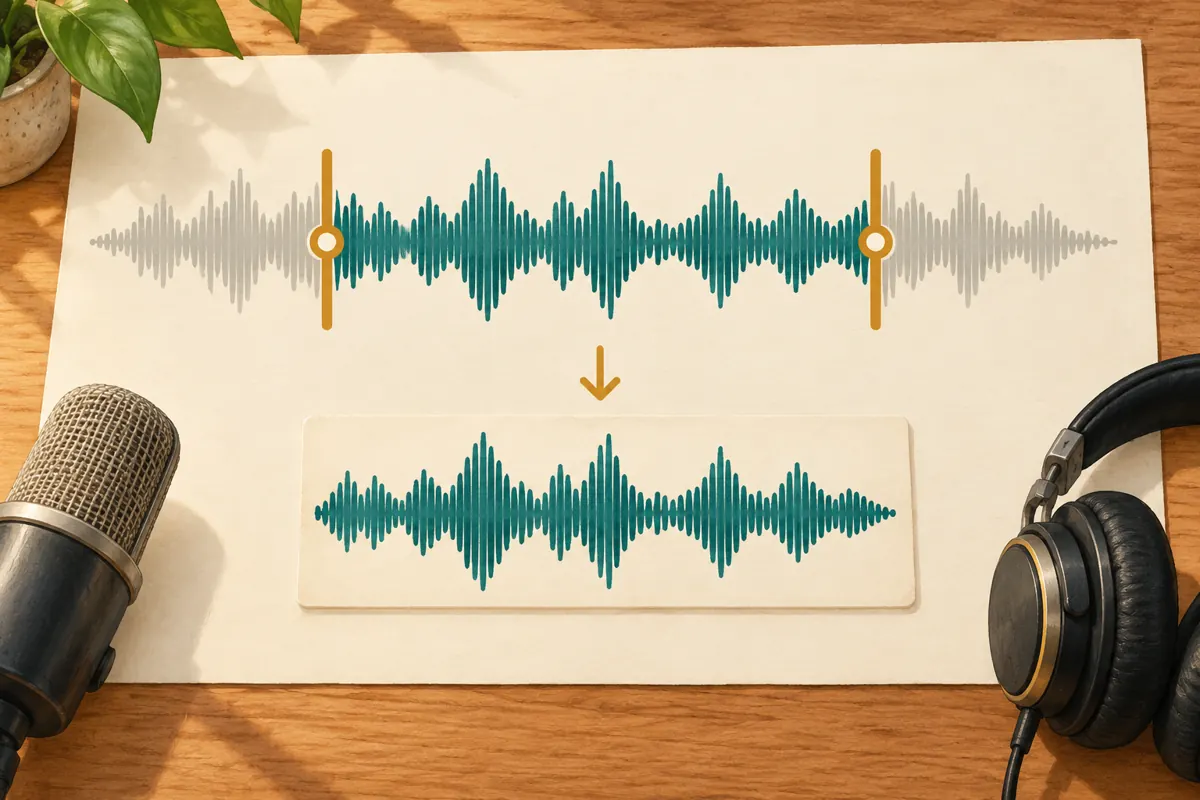
Telegram’s official announcement explains that voice recordings can be trimmed by moving their start and end points. The option appears when you swipe up to lock recording. After recording and trimming, you can also add further sections using the microphone icon. These controls concern preparing a recording before sending it; they should not be treated as a promise that an already published voice message can be repaired in place.
Use endpoint trimming for a delayed start, an abandoned opening or unnecessary speech after the conclusion. If the retained passage contains an incorrect promise in the middle, record a clean version. Moving the outer boundaries cannot selectively remove every internal mistake while preserving everything around it. Check the controls in the app staff actually use before making this feature part of a routine production process.
3. Prepare the recording around three spoken parts
Prepare a short outline with three parts: identify the question, explain the relevant condition and describe the next action. In the hypothetical rice-cooker example, the speaker first names the appliance. They then explain that the shop needs its model information before confirming whether an inspection is suitable. Finally, they ask the customer to send an exterior photo, a readable model-label photo and a description of the problem through the shop’s stated contact route.
Use the language your intended customers understand comfortably. A shop serving mainly Khmer-speaking customers can record in Khmer while keeping genuine brand names and model identifiers accurate. If another language is needed, prepare a separate, clearly identified explanation rather than switching unpredictably between languages. Ask a colleague to check technical terms and the meaning of any condition before recording.
4. Record somewhere the explanation can be heard
Move away from active machinery, passing traffic and conversations at the counter. Make a brief test recording and listen through an ordinary phone speaker. If the speaker’s words compete with background sound, change the location or the distance from the phone. Endpoint trimming is not a substitute for an intelligible recording, and promotional spending cannot make an unclear explanation easier to hear.
Keep customer names, telephone numbers and individual repair discussions out of a public recording. Use a generic example prepared for publication. If someone interrupts with information about a customer’s appliance, stop and make another take. For this type of promotional explanation, there is usually little reason to salvage a recording that mixes public guidance with private workshop conversation.
5. Trim distractions while preserving the meaning
Locate the first complete sentence that identifies the subject. Move the starting boundary so the listener hears that sentence naturally, without losing its first sound. At the end, retain the complete next-step instruction and a comfortable finish. Listen across both boundaries. A clip that technically contains every word can still sound abrupt if it begins halfway through a breath or ends against the final syllable.
Review conditions especially carefully. In a hypothetical take, the speaker says, “We can discuss inspection after you send the model details.” Removing the final phrase changes what customers may reasonably expect. Likewise, a statement that an estimate depends on examination must remain attached to the estimate. The goal is a complete explanation with less distraction, not the shortest possible recording.
6. Give the voice note a written companion
Prepare a nearby text message that names the topic and contains the facts customers may need to copy or revisit. For the hypothetical shop, a suitable English draft would be: “Rice-cooker inspection enquiries: send an exterior photo, a clear model-label photo and a description of the problem to our listed shop contact. We will confirm whether we can inspect the appliance before you travel.” Translate and review it for the actual audience.
Treat that draft as a structure, not a universal repair policy. Replace it with the shop’s real requirements and contact details. Include confirmed opening hours or location information when relevant. The written version should be useful without playing the recording, particularly for people who cannot listen at that moment. It should also agree with the audio about what the shop has and has not confirmed.
7. Test understanding before promoting the message
Ask a colleague who did not write the outline to listen once. Then ask them to explain which appliance the message covers, what information the customer must provide and whether a repair or visit has already been confirmed. If they answer incorrectly, revise the content. Simply asking whether the recording sounds good often produces approval without revealing a misunderstanding.
Repeat the review using the written companion alone. Both versions should lead to the same next step. Check the actual contact destination as well: staff must be able to receive and respond to the requested information. A clear voice note can still create frustration if it directs people to an unattended conversation. Prepare a useful first response before drawing more attention to the post.
8. Decide whether an SMM panel service fits this task
The supplied public catalogue includes the exact service name “Telegram - Post Views - [ LAST 5 POST ]”. Its wording identifies a post-view offering referring to the last five posts. The brief provides no description explaining accepted media, how those posts are selected or whether a voice-message post qualifies. Do not infer those details from the title. Ask for the current requirements before treating it as an available option for this workflow.
A view-related service does not edit audio, assess comprehension or handle repair enquiries. Purchased engagement is not evidence of genuine interest, sales, advertising delivery or Cambodian users. Nor does a post-view count establish that someone listened to a complete voice message. If your immediate problem is missing model information or confused travel expectations, improve the explanation and response process before considering expenditure on a metric.
9. Review the whole post group before any purchase
A title referring to the last five posts creates a specific question for this scenario: which content would be included? The channel might contain a voice explanation, its written companion, a location update and unrelated appliance posts. Before proceeding, obtain a clear answer about the selected targets and whether later posting could affect selection. If those details remain uncertain, defer the purchase rather than assuming only the intended explanation will be involved.
Record the service title, confirmed scope and relevant public references in the internal promotion note. Include a plain statement that audio completion and customer understanding are not established by delivery records. This makes the spending decision reviewable without turning the article into a promise about catalogue functionality. It also helps the person answering enquiries understand what was promoted and what the purchase was intended to supply.
10. Learn from enquiries without overstating the result
After publication, record the questions people actually ask. Useful observations include whether they identify the appliance, supply readable model information or mistakenly think an inspection is already booked. Keep these observations separate from any panel delivery record. A customer enquiry can reveal confusion in the explanation, but it does not automatically establish which promotional activity caused that person to contact the shop.
Set a review point that suits staff capacity. If customers repeatedly omit the same detail, make that request more explicit in the next version. If the shop’s inspection process changes, review the recording and written companion together before further promotion. Preserve an internal note identifying the approved version so a colleague does not reuse an older explanation merely because its audio sounds polished.
Frequently asked questions
Should every promotional Telegram post include a voice note?
No. Use one when speech helps explain a process or answer a recurring question. A location, model reference or simple opening-hours update may work better as text or an image with clear supporting text. Audio adds value when it reduces confusion; it also creates another version that staff must keep accurate.
What should we do if the trimming controls are missing?
Check that you used the locked-recording flow described in Telegram’s official guidance, and check the app version and available controls. Do not send an unfinished take simply to continue the workflow. A fresh, carefully recorded message or a complete written explanation is a practical alternative while you resolve the interface question.
Can trimming remove workshop noise throughout the recording?
Moving the beginning and ending boundaries removes unwanted outer portions. It does not establish that background noise within the retained explanation has been cleaned up. If customers cannot distinguish the words, record again in a quieter place. Test the new recording on a normal phone speaker before approving it.
Is a shorter recording always better for promotion?
No. A shorter recording can be less useful if it loses the condition that prevents a wasted visit. Keep the material needed for an accurate decision, including what remains unconfirmed. Remove repetition and unrelated openings first. Judge the result by whether a listener understands the next step, rather than by an arbitrary duration.
Can increased post views show that customers understood the audio?
No. A view count does not answer whether someone played the entire recording, understood its conditions or intended to request service. Purchased views cannot establish those conclusions either. Use actual questions and voluntarily supplied enquiry details to identify misunderstandings, while acknowledging that they still do not prove which promotion caused an enquiry.
What is the most useful response when an enquiry is incomplete?
Ask for the specific missing item rather than sending the whole explanation again without context. For example, a hypothetical reply might request a clearer model-label photo and explain why the shop needs it. If the same omission keeps occurring, revise the public instructions so the next customer has a better starting point.
Explore the current service catalogue, create an account, or ask a specific question through support tickets.
Prepared with AI assistance. Illustrations explain the workflow and do not represent customer results.